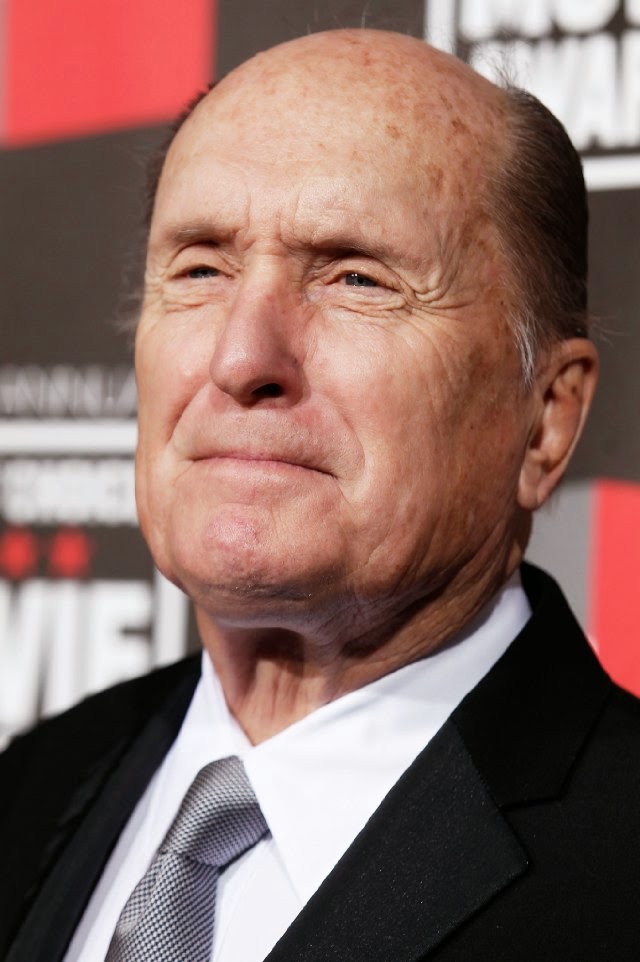
Film: End of Sentence (2020)
Stars: John Hawkes, Logan Lerman, Sarah Bolger
Director: Elfar Adalsteins
Oscar History: No nominations
Snap Judgment Ranking: 3/5 stars
We're going to continue our look at films of 2020 (that you might have missed) with End of Sentence, a film that appears to have been on the shelf for a while (supposedly it was shot in 2017 but hasn't been released widely until May of this year). The film features two actors who are ubiquitous at the movies today, but aren't really at the "star status" they might be. After Hawkes' Oscar nomination & Lerman's star-making work in Percy Jackson and Perks of Being a Wallflower, neither have graduated to a blockbuster franchise (one that hasn't expired...sorry Percy) nor to a hit cable drama series. Instead, they're cranking out interesting work in tiny character studies, with Lerman, in particular, going the way of Robert Pattinson with (so far) no wearing tights or a black cape.
(Spoilers Ahead) The movie is about Frank Fogle (Hawkes), who is picking his son Sean (Lerman) up from prison. Frank and Sean have an estranged relationship, one that as we continue we understand was related to Frank's father, who beat and emotionally abused Sean as a child, and which we are left to assume Frank didn't stop. Frank, though, comes with a proposition-he will pay for his son to go anywhere he wants after prison, but only if he honors his late mother's dying wish-that her ashes be spread at a lake in Ireland. As the film progresses, Frank & Logan encounter a beautiful woman (Bolger), who turns out to be a grifter, and slowly learn more about each other & about the woman who wanted to unite them.
End of Sentence is slighter than you'd think given the heavy subject matter. Hawkes & Lerman elevate the work (Lerman, in particular), but it doesn't have a lot of meat for pretty heavy subject matter. When it comes to the fractured relationship between the two men, we're supposed to infer a lot of things that don't quite add up, particularly as the relationship both men have to Frank's father becomes clearer as the movie goes on...but in the process makes their own presents a bit murkier. This results in the movie being kind of forgettable if never actively bad.
That said, I liked Lerman a lot in the movie. Hawkes is fair, but considering what he talent he was in Winter's Bone or Martha Marcy Mae Marlene, it's hard to see him not give the role more. Lerman, though, finds a danger & sexuality to his character we wouldn't have seen on the page (word to the thirsty-Lerman is in various states of undress for large swaths of the entire film for no obvious reason). Lerman's relationship then with Bolger's Jewel is actually the film's best part-we see the ways that he wants to borrow the best parts of his parents' relationship, even if he won't announce it out loud. This is all intriguing-it's a bit wasted in a movie so surface-level, but it's proof that good actors can make anything interesting if they try.
Showing posts with label Logan Lerman. Show all posts
Tuesday, September 22, 2020
Wednesday, July 15, 2020
Shirley (2020)
Film: Shirley (2020)
Stars: Elisabeth Moss, Michael Stuhlbarg, Logan Lerman, Odessa Young
Director: Josephine Decker
Oscar History: No nominations
Snap Judgment Ranking: 3/5 stars
All right, so we're continuing our week-long look at the movies of 2020 with a second film that played at Sundance (the first was Monday's Palm Springs), Shirley. The movie, purchased by Neon, seemed destined for the sort of critically-acclaimed (but brief) summer run that such movies oftentimes get. The film got raves, and falls into the weird glut of movies that Elisabeth Moss has been choosing to excel in since Mad Men went off the air. She's taken on key roles in mainstream flicks (Us, The Kitchen, The Invisible Man), but by-and-large she's just been acing work in really low-key independent cinema, in some cases movies you might not have even have heard of despite her celebrity (Mad to Be Normal, Light of My Life, The Free World, Chuck). Here, she plays what could be one of her most memorable roles as legendary horror writer Shirley Jackson.
(Spoilers Ahead) The film is told over the course of one school year. We have a young couple Rose (Young) and Fred Nesser (Lerman), who are staying at Bennington College with Stanley Hyman (Stuhlbarg) and his wife Shirley Jackson, who has recently written the critically-acclaimed (but deeply controversial) short story "The Lottery." Jackson doesn't conform to the role of a professor's wife naturally. She's abrupt, curt (frequently crossing into rude), and discusses sex in a way that other people simply don't do in the 1950's. She starts a strange friendship with the pregnant Rose, messing with her head, but still seemingly liking her in the only way Shirley can express...all the while tormenting herself with a new novel that she refuses to let her husband read. As the film unfolds, we begin to see the complicated dynamic between Shirley & Stanley, and the way that the Nessers' relationship covers for a less than idyllic marriage.
This is not an easy film, and certainly not a straight-forward biopic. It takes place for a just a year, while Jackson is writing one of her novels Hangasaman (a book that is celebrated, but not something that you could instantly name-check in the same way you could something like "The Lottery"). Hangsaman was based on the real-life disappearance of Paula Jean Welden, who attended Bennington college and who the real-life Jackson doesn't appear to have met, but her husband may have when she attended the school. This murderous nature of a real-life crime hangs over the film in the way that we see fictionalized versions of real-people, and Jackson's paranoia & fits of mad genius leave us questioning everything we see.
This generally works, though it's hard-to-watch. The movie is doused in heat, a sticky sweat over all of the actors. The film frequently shows the Nessers in some throw of sexual desire (though it's worth noting that this is not an equal opportunity nudity situation, as Young is forced to be far more exposed in these scenes than the more-famous Lerman), and it always feels hot, and not in the double entendre way. The movie perhaps doesn't always have a firm enough script to carry its plotting, and some of its twists feel a bit arbitrary (either they were telegraphed an hour earlier or feel like an unnecessary distraction), but it's watchable thanks to Moss in the central role. She's extraordinary as Jackson, finding menace with a playfulness that makes her Shirley feel like a demonic, overly-talented child. She plays her scenes knowing that she wants things from others, but confident that she's better than everyone (and has the talent to prove it). It's the kind of work that when Moss inevitably starts scoring frequent Oscar nominations we're going to point to as evidence that she could pull off such a performance all along (like Julianne Moore in Safe).
Stars: Elisabeth Moss, Michael Stuhlbarg, Logan Lerman, Odessa Young
Director: Josephine Decker
Oscar History: No nominations
Snap Judgment Ranking: 3/5 stars
All right, so we're continuing our week-long look at the movies of 2020 with a second film that played at Sundance (the first was Monday's Palm Springs), Shirley. The movie, purchased by Neon, seemed destined for the sort of critically-acclaimed (but brief) summer run that such movies oftentimes get. The film got raves, and falls into the weird glut of movies that Elisabeth Moss has been choosing to excel in since Mad Men went off the air. She's taken on key roles in mainstream flicks (Us, The Kitchen, The Invisible Man), but by-and-large she's just been acing work in really low-key independent cinema, in some cases movies you might not have even have heard of despite her celebrity (Mad to Be Normal, Light of My Life, The Free World, Chuck). Here, she plays what could be one of her most memorable roles as legendary horror writer Shirley Jackson.
(Spoilers Ahead) The film is told over the course of one school year. We have a young couple Rose (Young) and Fred Nesser (Lerman), who are staying at Bennington College with Stanley Hyman (Stuhlbarg) and his wife Shirley Jackson, who has recently written the critically-acclaimed (but deeply controversial) short story "The Lottery." Jackson doesn't conform to the role of a professor's wife naturally. She's abrupt, curt (frequently crossing into rude), and discusses sex in a way that other people simply don't do in the 1950's. She starts a strange friendship with the pregnant Rose, messing with her head, but still seemingly liking her in the only way Shirley can express...all the while tormenting herself with a new novel that she refuses to let her husband read. As the film unfolds, we begin to see the complicated dynamic between Shirley & Stanley, and the way that the Nessers' relationship covers for a less than idyllic marriage.
This is not an easy film, and certainly not a straight-forward biopic. It takes place for a just a year, while Jackson is writing one of her novels Hangasaman (a book that is celebrated, but not something that you could instantly name-check in the same way you could something like "The Lottery"). Hangsaman was based on the real-life disappearance of Paula Jean Welden, who attended Bennington college and who the real-life Jackson doesn't appear to have met, but her husband may have when she attended the school. This murderous nature of a real-life crime hangs over the film in the way that we see fictionalized versions of real-people, and Jackson's paranoia & fits of mad genius leave us questioning everything we see.
This generally works, though it's hard-to-watch. The movie is doused in heat, a sticky sweat over all of the actors. The film frequently shows the Nessers in some throw of sexual desire (though it's worth noting that this is not an equal opportunity nudity situation, as Young is forced to be far more exposed in these scenes than the more-famous Lerman), and it always feels hot, and not in the double entendre way. The movie perhaps doesn't always have a firm enough script to carry its plotting, and some of its twists feel a bit arbitrary (either they were telegraphed an hour earlier or feel like an unnecessary distraction), but it's watchable thanks to Moss in the central role. She's extraordinary as Jackson, finding menace with a playfulness that makes her Shirley feel like a demonic, overly-talented child. She plays her scenes knowing that she wants things from others, but confident that she's better than everyone (and has the talent to prove it). It's the kind of work that when Moss inevitably starts scoring frequent Oscar nominations we're going to point to as evidence that she could pull off such a performance all along (like Julianne Moore in Safe).
Wednesday, August 31, 2016
Indignation (2016)
Film: Indignation (2016)
Stars: Logan Lerman, Sarah Gadon, Danny Burstein, Linda Emond, Tracy Letts
Director: James Schamus
Oscar History: No nominations
Snap Judgment Ranking: 3/5 stars
I think I have officially gotten to the point where I will watch Logan Lerman in pretty much anything. I've never seen the Percy Jackson movies, admittedly, but Lerman consistently has pointed out that he is a fine dramatic actor, and as proof, Indignation made it onto my watch list without anything going for it other than Lerman himself as a draw (which is a pretty select club for films I'll buy tickets to regardless of reviews or plot, simply for an actor). It shows, though, in a film like Indignation, one of those brave films that actually sets out to do the unthinkable: make a Philip Roth novel into a movie.
(Spoilers Ahead) The film follows a young man named Marcus (Lerman), a working-class Jewish boy during the heart of the Korean War who is planning on attending a Christian college in a small town in Ohio. He is persistently rattled by his father (Burstein), who is deeply overprotective of his son, partially because he is worried about the war and how many of his son's friends will end up perishing, and also about his son's future, both in terms of religion (Marcus proclaims himself an atheist) and potentially because of mental illness. The film unfolds with Marcus meeting a young woman named Olivia (Gadon), who has issues with depression and even once attempted suicide, but who seems to genuinely like him even though she is more sexually-forward than he is accustomed toward and as a result makes assumptions about her that she finds off-putting. As a result, their romance is very on-again/off-again.
The film is fascinating because Philip Roth is such a good storyteller, and there's really a lot of story and complicated issues at play here. The movie's title, you'd assume initially, would come from the economic issues at play at the beginning, with a now socially-climbing Marcus finding himself at odds with his butcher father, but instead it's about how pride and our own sense of self-worth occasionally leads us to make foolish, rash, and irreversible decisions. Every major character in the film at some point has a "pride goeth before the fall" situation, and in nearly every case they choose pride to their doom. Marcus, indignant over the perceived and very real slights he has with a school dean, ends up making a foolish mistake of having a student violate the church attendance policy, and as a result ends up dying in the Korean War after he is expelled from the university. His mother leads in part to this decision by breaking up Olivia with her son because she wants her definition of what is better for Marcus, not realizing that her son, like so many characters in the film, is dealing with his own sense of depression and inadequacy. Time and again the characters in the film, save perhaps Tracy Letts' Dean Caudwell, hand over their fate to pride, and in Dean Caudwell's situation holding off on instant gratification pays off as he destroys Marcus in a way that is permanent, and entirely within his rights as dean, and not just flying off the handle in a rash way.
It's a nastier movie than the surface would have allowed, and says a lot about what we as human beings will do to try and better ourselves. The film itself occasionally runs out of steam-the lead actors are excellent, but Danny Burstein doesn't translate well at all (weirdly the only one of a very Broadway-blessed cast to not be able to tone down the theatrics), but the movie occasionally meanders and loses focus in a way that would be rewarded in a novel (building to a climax) but in a film occasionally feels like lackluster editing. Plus, the film's ending, with Olivia decades later, her mind lost, still having remembrances of Marcus, felt a little cliched and hackneyed; I would have preferred us never returning to her, her life a mystery, and ending with Marcus in Korea. That being said, this was a strong movie, and not just because of Lerman's calming presence. I'll continue to buy tickets to his pictures sight-unseen if he continues to pick scripts this inventive.
Those are my thoughts on this film-how about yours? What's your favorite piece of work from Logan Lerman, and where do you want to see him go next? Do you have a Philip Roth novel you're hoping eventually makes the jump to the screen? And what Broadway stars do you wish would get a meaty transition to the big screen? Share below!
Stars: Logan Lerman, Sarah Gadon, Danny Burstein, Linda Emond, Tracy Letts
Director: James Schamus
Oscar History: No nominations
Snap Judgment Ranking: 3/5 stars
I think I have officially gotten to the point where I will watch Logan Lerman in pretty much anything. I've never seen the Percy Jackson movies, admittedly, but Lerman consistently has pointed out that he is a fine dramatic actor, and as proof, Indignation made it onto my watch list without anything going for it other than Lerman himself as a draw (which is a pretty select club for films I'll buy tickets to regardless of reviews or plot, simply for an actor). It shows, though, in a film like Indignation, one of those brave films that actually sets out to do the unthinkable: make a Philip Roth novel into a movie.
(Spoilers Ahead) The film follows a young man named Marcus (Lerman), a working-class Jewish boy during the heart of the Korean War who is planning on attending a Christian college in a small town in Ohio. He is persistently rattled by his father (Burstein), who is deeply overprotective of his son, partially because he is worried about the war and how many of his son's friends will end up perishing, and also about his son's future, both in terms of religion (Marcus proclaims himself an atheist) and potentially because of mental illness. The film unfolds with Marcus meeting a young woman named Olivia (Gadon), who has issues with depression and even once attempted suicide, but who seems to genuinely like him even though she is more sexually-forward than he is accustomed toward and as a result makes assumptions about her that she finds off-putting. As a result, their romance is very on-again/off-again.
The film is fascinating because Philip Roth is such a good storyteller, and there's really a lot of story and complicated issues at play here. The movie's title, you'd assume initially, would come from the economic issues at play at the beginning, with a now socially-climbing Marcus finding himself at odds with his butcher father, but instead it's about how pride and our own sense of self-worth occasionally leads us to make foolish, rash, and irreversible decisions. Every major character in the film at some point has a "pride goeth before the fall" situation, and in nearly every case they choose pride to their doom. Marcus, indignant over the perceived and very real slights he has with a school dean, ends up making a foolish mistake of having a student violate the church attendance policy, and as a result ends up dying in the Korean War after he is expelled from the university. His mother leads in part to this decision by breaking up Olivia with her son because she wants her definition of what is better for Marcus, not realizing that her son, like so many characters in the film, is dealing with his own sense of depression and inadequacy. Time and again the characters in the film, save perhaps Tracy Letts' Dean Caudwell, hand over their fate to pride, and in Dean Caudwell's situation holding off on instant gratification pays off as he destroys Marcus in a way that is permanent, and entirely within his rights as dean, and not just flying off the handle in a rash way.
It's a nastier movie than the surface would have allowed, and says a lot about what we as human beings will do to try and better ourselves. The film itself occasionally runs out of steam-the lead actors are excellent, but Danny Burstein doesn't translate well at all (weirdly the only one of a very Broadway-blessed cast to not be able to tone down the theatrics), but the movie occasionally meanders and loses focus in a way that would be rewarded in a novel (building to a climax) but in a film occasionally feels like lackluster editing. Plus, the film's ending, with Olivia decades later, her mind lost, still having remembrances of Marcus, felt a little cliched and hackneyed; I would have preferred us never returning to her, her life a mystery, and ending with Marcus in Korea. That being said, this was a strong movie, and not just because of Lerman's calming presence. I'll continue to buy tickets to his pictures sight-unseen if he continues to pick scripts this inventive.
Those are my thoughts on this film-how about yours? What's your favorite piece of work from Logan Lerman, and where do you want to see him go next? Do you have a Philip Roth novel you're hoping eventually makes the jump to the screen? And what Broadway stars do you wish would get a meaty transition to the big screen? Share below!
Saturday, January 30, 2016
OVP: 3:10 to Yuma (2007)
Film: 3:10 to Yuma (2007)
Stars: Russell Crowe, Christian Bale, Logan Lerman, Ben Foster, Peter Fonda
Director: James Mangold
Oscar History: 2 nominations (Best Original Score, Sound Mixing)
Snap Judgment Ranking: 4/5 stars
When I make a list of my favorite filmic genres for people, the western is not usually on the top of the list, if I'm being honest. Detective films, noir, romantic epics-these are what I usually gravitate toward, but there's always a caveat I throw on to this question, that if the genre is done well, I'll like pretty much any genre (even sports films, though that's admittedly a harder pill to swallow), and this is particularly true of the western. Modern westerns, so rare compared to their heyday when they seemed to abound with an intense ease on the screen, are almost always made by a director who handles them with care, mostly because they had to beg to get them made, and films like Brokeback Mountain, No Country for Old Men, and The Assassination of Jesse James (my Holy Trinity of this century's westerns) are three of the greatest films of the past decade. While 3:10 to Yuma never quite enters that territory, it is handled with immense care, bringing forth some really wonderful acting and action moments that sing onscreen, and reminds me why, at one point, we were so enamored with Christian Bale and Russell Crowe.
(Spoilers Ahead) The film follows Dan Evans (Bale), a man in need of money or he will lose his farm (the opening scene is of Evans' barn being destroyed by the men to whom he owes money, and there's an implication that next time it will be his family who is destroyed as a result). He has a fractured relationship with his son William (Lerman), who sees him as a failure and someone to be ashamed of because he lives in shambles and cannot provide for his wife and children. While they are out on horseback, they happen upon a stagecoach robbery, where notorious outlaw Ben Wade (Crowe) and his gang, including Charlie Prince (Foster) are amongst the bandits. This results in a series of events where Evans is hired to take a captured Wade to a 3:10 train to the Yuma Territorial Prison, in exchange for which he'll have enough money to pay his debtors.
All-in-all this may be the most western of western plotlines, and it's worth noting that this film is a remake of a classic 1957 film starring Glenn Ford and Van Heflin. However, the film never relies on its most rudimentary of plots for its strength, and instead does what great westerns do and rises above the expectations with flare. Russell Crowe, at the time not quite the assured presence of a boring figure who used to be a movie star, was just about to end his reign as a major motion picture star, but you can see here why he became one in the first place. Gone is the semi-seriousness of Les Miserables, but instead a wry sense of humor and a sheen of menace that makes his actions truly unpredictable-just when you think he's going soft he's willing to sacrifice someone to save his own skin, and only takes risks with himself in mind first. Christian Bale's Evans, conversely, relies less on his later penchant for over-acting or overtly method style, and we see here simply a man trying to regain honor and his own family's fortune. His son, played by Lerman who has always been a favorite of mine, is also distinctive enough that you can see why Lerman rose above the hundreds of random child actors who litter movies and instead actually became a film star in his own right.
Best of all is Ben Foster's Charlie Prince, it has to be said, someone who gained something of a cult following after this movie. Ruthless to his core, he's also clearly a creature that we haven't seen in the western canon-a nasty, cruel man, but one who clearly likes the company of other fellas. It's quite obvious that he's in-lust with Wade (not love, because I don't think Charlie Prince knows how to love, at least in a conventional way), but the way that he only is willing to take a gamble for someone is if it's for Wade spells out pretty clearly where Charlie Prince (or "Charlie Princess," as one man calls him before he dies) and his loyalties lie. Overall, the cast is actually quite wholly outstanding, and though I didn't realize it while watching, it was actually nominated for the SAG Best Cast of a Motion Picture category, one of those rare times where they didn't just predict a Best Picture nominee and instead actually went for a film that deserves it. After all, 3:10 to Yuma is a spry ride, and a very good movie.
Those are my thoughts on 3:10 to Yuma, a film I didn't expect to enjoy nearly as much as I did. What about yours? Are you as into the cast as I am? Are you a supporter of its two Oscar nominations? And what are some of your favorite modern westerns? Share your thoughts in the comments!
Stars: Russell Crowe, Christian Bale, Logan Lerman, Ben Foster, Peter Fonda
Director: James Mangold
Oscar History: 2 nominations (Best Original Score, Sound Mixing)
Snap Judgment Ranking: 4/5 stars
When I make a list of my favorite filmic genres for people, the western is not usually on the top of the list, if I'm being honest. Detective films, noir, romantic epics-these are what I usually gravitate toward, but there's always a caveat I throw on to this question, that if the genre is done well, I'll like pretty much any genre (even sports films, though that's admittedly a harder pill to swallow), and this is particularly true of the western. Modern westerns, so rare compared to their heyday when they seemed to abound with an intense ease on the screen, are almost always made by a director who handles them with care, mostly because they had to beg to get them made, and films like Brokeback Mountain, No Country for Old Men, and The Assassination of Jesse James (my Holy Trinity of this century's westerns) are three of the greatest films of the past decade. While 3:10 to Yuma never quite enters that territory, it is handled with immense care, bringing forth some really wonderful acting and action moments that sing onscreen, and reminds me why, at one point, we were so enamored with Christian Bale and Russell Crowe.
(Spoilers Ahead) The film follows Dan Evans (Bale), a man in need of money or he will lose his farm (the opening scene is of Evans' barn being destroyed by the men to whom he owes money, and there's an implication that next time it will be his family who is destroyed as a result). He has a fractured relationship with his son William (Lerman), who sees him as a failure and someone to be ashamed of because he lives in shambles and cannot provide for his wife and children. While they are out on horseback, they happen upon a stagecoach robbery, where notorious outlaw Ben Wade (Crowe) and his gang, including Charlie Prince (Foster) are amongst the bandits. This results in a series of events where Evans is hired to take a captured Wade to a 3:10 train to the Yuma Territorial Prison, in exchange for which he'll have enough money to pay his debtors.
All-in-all this may be the most western of western plotlines, and it's worth noting that this film is a remake of a classic 1957 film starring Glenn Ford and Van Heflin. However, the film never relies on its most rudimentary of plots for its strength, and instead does what great westerns do and rises above the expectations with flare. Russell Crowe, at the time not quite the assured presence of a boring figure who used to be a movie star, was just about to end his reign as a major motion picture star, but you can see here why he became one in the first place. Gone is the semi-seriousness of Les Miserables, but instead a wry sense of humor and a sheen of menace that makes his actions truly unpredictable-just when you think he's going soft he's willing to sacrifice someone to save his own skin, and only takes risks with himself in mind first. Christian Bale's Evans, conversely, relies less on his later penchant for over-acting or overtly method style, and we see here simply a man trying to regain honor and his own family's fortune. His son, played by Lerman who has always been a favorite of mine, is also distinctive enough that you can see why Lerman rose above the hundreds of random child actors who litter movies and instead actually became a film star in his own right.
Best of all is Ben Foster's Charlie Prince, it has to be said, someone who gained something of a cult following after this movie. Ruthless to his core, he's also clearly a creature that we haven't seen in the western canon-a nasty, cruel man, but one who clearly likes the company of other fellas. It's quite obvious that he's in-lust with Wade (not love, because I don't think Charlie Prince knows how to love, at least in a conventional way), but the way that he only is willing to take a gamble for someone is if it's for Wade spells out pretty clearly where Charlie Prince (or "Charlie Princess," as one man calls him before he dies) and his loyalties lie. Overall, the cast is actually quite wholly outstanding, and though I didn't realize it while watching, it was actually nominated for the SAG Best Cast of a Motion Picture category, one of those rare times where they didn't just predict a Best Picture nominee and instead actually went for a film that deserves it. After all, 3:10 to Yuma is a spry ride, and a very good movie.
Those are my thoughts on 3:10 to Yuma, a film I didn't expect to enjoy nearly as much as I did. What about yours? Are you as into the cast as I am? Are you a supporter of its two Oscar nominations? And what are some of your favorite modern westerns? Share your thoughts in the comments!
Thursday, November 13, 2014
Fury (2014)
Film: Fury (2014)
Stars: Brad Pitt, Shia LaBeouf, Logan Lerman, Michael Pena, Jon Bernthal
Director: David Ayer
Oscar History: No nominations
Snap Judgment Ranking: 3/5 stars
Brad Pitt, in my opinion, is the best actor currently working in the movies. I realized the other day that I have seen every live-action film that Pitt has made, save one, for the past ten years, and I saw them all in theaters I was excited enough to watch them (for the record, the holdout was Ocean's Thirteen, and I stand by my decision). Whether it's the haunted father of The Tree of Life or the bizarrely-coiffed trainer of Burn After Reading or his Oscar-nominated work as a chill baseball scout in Moneyball, Pitt consistently finds a soul and a real purpose behind his characters, resulting in one of the longest streaks of strong performances I've seen from an actor in eons. And that streak continues in David Ayer's Fury, a film that occasionally trips over itself in terms of plot but is buoyed by strong central performances and yet another fascinating chapter in the "War is Hell" saga that the cinema continues to investigate.
(Spoilers Ahead) Told in the waning days of World War II, the film is about a crew of Americans who have been together for most of the war, operating a tank and battling the Nazis. The fascinating conundrum of the war is that we, the audience, know that they're winning. It's an interesting chapter to add to the war-there is clearly a victor and a loser at this point, and we as the audience are just waiting for Hilter to concede, and will he do it in time to save our small platoon. That's one of the first things that is introduced to this group: the tick-tick-tick of time, and how they all are waiting for what will happen next.
The first half of the film is by far the superior half, principally because it shows the burgeoning, complicated dynamic between Wardaddy (Pitt) and the newest man in his charge, Norman (Lerman). There's so many great scenes in this first half of the movie, and the really fascinating thing is how they treat certain cliches. Norman, for example, has his requisite reluctant-to-kill moment which costs the life of another soldier, and Pitt's Wardaddy reams him for this. We've seen this in other films, but because of the claustrophobia of the film (we rarely leave the focus of Pitt or Lerman's eyes), you see how excruciating this is-Lerman doesn't have much escape into the vast German countryside, he just sits in a hot tank all day, thinking, killing, and thinking about his killing (or lack thereof). The claustrophobia comes across particularly well because Lerman knows how to utilize his youthful appearance and find a very realistic reaction to the war. He had been a desk clerk, and the frustration in knowing the war is almost over, but he was still brought into Hell when it might not be necessary-the anger there is palpable and radiates from him every time he shakes in fury.
The first half also has one of the most fascinating detours in film this year-the much discussed dinner sequence. In this scene, Wardaddy and Norman go in and meet two women in a German town that they had just ransacked. The immediacy of this encounter, with the older woman trying to protect the virtue of her younger cousin Emma (von Rittberg) shows the isolation of war. We don't think, particularly with World War II films, of the way that the war ravaged the German people, but of course it did, and you see the fear in these women's eyes. Eventually Norman and Emma sleep together (the film is ambiguous on this front, but I'm going to guess that they do), and get a return to normalcy with some nice eggs for breakfast. This is interrupted in a deeply uncomfortable fashion by the rest of the men of the platoon, who squash this return to normalcy with their machismo and lack of understanding of the situation. It's easily the best scene in the movie, anchored by Pitt's calm-but-unshakable presence and Lerman's desire to return to his normalcy while still finding a more traditional and safer way to establish his masculinity. Both actors knock this scene (and truly, most of their scenes) out of the park.
The second half of the film is a bit of a disaster, however, because it seems so horribly unnecessary (and not in the obvious "war is not necessary" sort of way). The final stand-off between the crew and a group of German soldiers doesn't remotely jive with the interesting dinner scene. That moment showed Wardaddy ready to hang up his guns and rejoin society, and yet here he is, ready and totally willing to kill himself and every person in his crew for, well, nothing. The Americans are winning the war, they all know it-why stick around to fight a group of German soldiers knowing the war will be over in a matter of days, if not hours? Go back, get more men, and then you can properly fight and win. It's a bizarre and extremely convenient plot twist that makes no sense, and is followed by an even more bizarre and convenient change in Norman's perception of the war, as he far too quickly embraces his brothers-in-arms and shifts his view of the war in essentially a day or two, which seems unreasonably quick.
The entire second half is bad after a truly excellent first half, so I am teetering between two and three stars. I'll go in with this caveat-the acting with the MAJOR exception of Jon Bernthal (who is scenery-chewing awful in his first major screen role) is almost uniformly good. Lerman and Pitt are on fire as actors lately (I'll see either of them in pretty much anything) and Shia LaBeouf is quite strong as a bible-thumping soldier caught between his morals and his duty. The cinematography is glossy and thanks to being shot on film this year has one of the most romantic uses of soft imagery I've seen in cinema in 2014. And the dinner scene is just sublime. So I'm going with three stars, but be warned that the plot enters seriously dated war cliche stuff in the second half, and is predictable in who lives and who dies.
Those were my thoughts on this film-how about yours? Is anyone equally obsessed with Pitt and Lerman? Did you also find the film's sharp detour in tone to be off-putting? And where precisely will Shia LaBeouf take his career next? Share in the comments!
Stars: Brad Pitt, Shia LaBeouf, Logan Lerman, Michael Pena, Jon Bernthal
Director: David Ayer
Oscar History: No nominations
Snap Judgment Ranking: 3/5 stars
Brad Pitt, in my opinion, is the best actor currently working in the movies. I realized the other day that I have seen every live-action film that Pitt has made, save one, for the past ten years, and I saw them all in theaters I was excited enough to watch them (for the record, the holdout was Ocean's Thirteen, and I stand by my decision). Whether it's the haunted father of The Tree of Life or the bizarrely-coiffed trainer of Burn After Reading or his Oscar-nominated work as a chill baseball scout in Moneyball, Pitt consistently finds a soul and a real purpose behind his characters, resulting in one of the longest streaks of strong performances I've seen from an actor in eons. And that streak continues in David Ayer's Fury, a film that occasionally trips over itself in terms of plot but is buoyed by strong central performances and yet another fascinating chapter in the "War is Hell" saga that the cinema continues to investigate.
(Spoilers Ahead) Told in the waning days of World War II, the film is about a crew of Americans who have been together for most of the war, operating a tank and battling the Nazis. The fascinating conundrum of the war is that we, the audience, know that they're winning. It's an interesting chapter to add to the war-there is clearly a victor and a loser at this point, and we as the audience are just waiting for Hilter to concede, and will he do it in time to save our small platoon. That's one of the first things that is introduced to this group: the tick-tick-tick of time, and how they all are waiting for what will happen next.
The first half of the film is by far the superior half, principally because it shows the burgeoning, complicated dynamic between Wardaddy (Pitt) and the newest man in his charge, Norman (Lerman). There's so many great scenes in this first half of the movie, and the really fascinating thing is how they treat certain cliches. Norman, for example, has his requisite reluctant-to-kill moment which costs the life of another soldier, and Pitt's Wardaddy reams him for this. We've seen this in other films, but because of the claustrophobia of the film (we rarely leave the focus of Pitt or Lerman's eyes), you see how excruciating this is-Lerman doesn't have much escape into the vast German countryside, he just sits in a hot tank all day, thinking, killing, and thinking about his killing (or lack thereof). The claustrophobia comes across particularly well because Lerman knows how to utilize his youthful appearance and find a very realistic reaction to the war. He had been a desk clerk, and the frustration in knowing the war is almost over, but he was still brought into Hell when it might not be necessary-the anger there is palpable and radiates from him every time he shakes in fury.
The first half also has one of the most fascinating detours in film this year-the much discussed dinner sequence. In this scene, Wardaddy and Norman go in and meet two women in a German town that they had just ransacked. The immediacy of this encounter, with the older woman trying to protect the virtue of her younger cousin Emma (von Rittberg) shows the isolation of war. We don't think, particularly with World War II films, of the way that the war ravaged the German people, but of course it did, and you see the fear in these women's eyes. Eventually Norman and Emma sleep together (the film is ambiguous on this front, but I'm going to guess that they do), and get a return to normalcy with some nice eggs for breakfast. This is interrupted in a deeply uncomfortable fashion by the rest of the men of the platoon, who squash this return to normalcy with their machismo and lack of understanding of the situation. It's easily the best scene in the movie, anchored by Pitt's calm-but-unshakable presence and Lerman's desire to return to his normalcy while still finding a more traditional and safer way to establish his masculinity. Both actors knock this scene (and truly, most of their scenes) out of the park.
The second half of the film is a bit of a disaster, however, because it seems so horribly unnecessary (and not in the obvious "war is not necessary" sort of way). The final stand-off between the crew and a group of German soldiers doesn't remotely jive with the interesting dinner scene. That moment showed Wardaddy ready to hang up his guns and rejoin society, and yet here he is, ready and totally willing to kill himself and every person in his crew for, well, nothing. The Americans are winning the war, they all know it-why stick around to fight a group of German soldiers knowing the war will be over in a matter of days, if not hours? Go back, get more men, and then you can properly fight and win. It's a bizarre and extremely convenient plot twist that makes no sense, and is followed by an even more bizarre and convenient change in Norman's perception of the war, as he far too quickly embraces his brothers-in-arms and shifts his view of the war in essentially a day or two, which seems unreasonably quick.
The entire second half is bad after a truly excellent first half, so I am teetering between two and three stars. I'll go in with this caveat-the acting with the MAJOR exception of Jon Bernthal (who is scenery-chewing awful in his first major screen role) is almost uniformly good. Lerman and Pitt are on fire as actors lately (I'll see either of them in pretty much anything) and Shia LaBeouf is quite strong as a bible-thumping soldier caught between his morals and his duty. The cinematography is glossy and thanks to being shot on film this year has one of the most romantic uses of soft imagery I've seen in cinema in 2014. And the dinner scene is just sublime. So I'm going with three stars, but be warned that the plot enters seriously dated war cliche stuff in the second half, and is predictable in who lives and who dies.
Those were my thoughts on this film-how about yours? Is anyone equally obsessed with Pitt and Lerman? Did you also find the film's sharp detour in tone to be off-putting? And where precisely will Shia LaBeouf take his career next? Share in the comments!
Friday, September 12, 2014
2014 Oscar Predictions: Best Supporting Actor
We have tackled Actress, Actor, and Supporting Actress, so to finish off the quartet we will now head into Best Supporting Actor predictions. Best Supporting Actor may be the hardest of the categories to predict this far in advance because frequently these nominations happen for films that aren't necessarily in the Best Picture race, (though historically these were most frequently Best Picture nominees, if a cursory look at former nominees are any indication), and so this is probably the prediction list most likely to change in the coming months.
The best way to start off in the Supporting Actor race is to think like a Republican, and find all of the older white men with major films out this year. This category tends to be the most homogenous of the four in terms of its demographics, and so the best place to start is probably Robert Duvall in The Judge. As we recently wrote about, Duvall is one of the most enduring stars with Oscar, but hasn't been nominated in sixteen years despite extremely strong reviews four years ago for Get Low (which I'm told is good but I didn't see because it missed the OVP-is this something I should be renting?). I suspect that a father/son drama with Oscar nominee Robert Downey, Jr. would get him some attention. Adding to the old white man cache would be Tom Wilkinson in Selma, where he'll do that greatest of Oscar tricks (play a famous real-life figure, in this case former President Lyndon Johnson), and I suspect he will probably be back (doesn't it feel weird that he is a recent two-time nominee that no one ever seems to talk about?). Finally, J.K. Simmons could fill the frequent slot of character-actor-we-are-finally-acknowledging, as his performance in Whiplash seems to be both co-lead and scene-stealing, and I suspect Oscar will want to give him a citation in the same way they have other major famous faces (but not necessarily famous names). Other older white dudes that could be in the conversation (though aren't as prevalent as these three) include Albert Brooks in A Most Violent Year (though if he couldn't score for Drive...), John Goodman in The Gambler (what is the deal with this movie?-for a film in December starring Mark Wahlberg and Jessica Lange it sure is under-performing, buzz-wise), and Tim Roth as Gov. George Wallace in Selma (though this category doesn't double-up as often in a film as Supporting Actress does).
Moving a bit out of the senior citizen bracket, probably your safest bet for a nomination would be Edward Norton in Birdman, where he appears to have a significant part and is the sort of actor Oscar has been itching to welcome back after his quick one-two punch in the 90's followed by a whole lack of loving from the Academy (AMPAS is a fickle mistress). Josh Brolin got a nomination for Milk in 2008 but has been working consistently since without any other nominations-if he's a particular stand-out in Inherent Vice I suspect we may see him in this race again. I'm not sure what it says about Ethan Hawke and the quality of this race versus Supporting Actress, but despite his equally good performance he doesn't seem to have the same sort of momentum as Patricia Arquette does for Boyhood. Still, if the film does well with precursors expect to see his name at least thrown around a bit after a trio of past nominations. Dominic West in Pride and Paul Jesson in Mr. Turner are both names that could factor into a race like this if the films strike, but the former has almost no buzz (is it it even going wide by art house standards?) and the latter is a Mike Leigh film, and Leigh is considerably better at getting women attention than men. And there's always the possibility that someone like Johnny Depp makes it for Into the Woods, though that show usually seems to be about the ladies in terms of awards (and I suspect that recently on-a-roll James Corden would be the standout if there was going to be one).
There are of course "younger" potential nominees in this category as well, the most important being Logan Lerman in Fury. Lerman was sensational (and Oscar-worthy) two years ago in Perks of Being a Wallflower, but way too young and cute to be nominated in lead. He's probably younger and sexier than you'd expect for a male category either way, but supporting is a better bet, particularly when working opposite Brad Pitt (Pitt is really good at bringing out his costars, just ask Oscar-nominated Geena Davis, Casey Affleck, and Jonah Hill). Domhnall Gleeson has a significant role in Unbroken and has been on the edges of stardom in a way his father frequently finds himself (anyone think it's odd that Brendan cannot seem to get any buzz for the well-received Calvary?). And then there's the truly excellent question regarding Foxcatcher-how do they market Channing Tatum and Mark Ruffalo in this film (I've heard marvelous things in particular about the former)? If they put them both as supporting, does Tatum overshadow Ruffalo? Or do they market Tatum in lead, giving Ruffalo a strong chance at a nomination but hurting Tatum? That's perhaps the biggest question of this Oscar season, campaign-wise, in my opinion.
My Predictions: I am guessing Simmons, Norton, Lerman, Duvall, and Wilkinson are at the top of the list at this point. Norton seems the most likely to be nominated, Lerman seems the least just because of his age. I'm intrigued by a couple of options on this list, though, and could see a few names popping up later in the year, particularly Goodman and the Foxcatcher lads.
Is There a Winner?: Like I said, Lerman is way too young to win here, I doubt that Wilkinson wins for playing a president so soon after Daniel Day-Lewis did, and I don't think that Norton will take it for what looks like a sidekick role. Simmons or Duvall, on the other hand, have the vibe of a winner. Simmons has been working in Hollywood for eons and is well-respected; plus, this is a role where he's set to dominate in a BIG way (have you seen the trailer?). Duvall, on the other hand, has entered the last phase of his career (may it hopefully be extremely long), and has only won one Oscar while many of his peers (de Niro, Hoffman, and Nicholson) all have more than one. I think that there may be a push to let him join that list (and hopefully get Al Pacino back into some good movies, damn it, to seal the quintet).
And there we have finished up the actors-we'll do the final September predictions (Best Picture!) this weekend, but before we close out our too-early guesses, what are your thoughts on this race? Do you think I have the five guys pegged, or should I have picked another name? Who am I missing on this list that may strike? And most importantly, which of these performances are you most looking forward to? Share in the comments!
The best way to start off in the Supporting Actor race is to think like a Republican, and find all of the older white men with major films out this year. This category tends to be the most homogenous of the four in terms of its demographics, and so the best place to start is probably Robert Duvall in The Judge. As we recently wrote about, Duvall is one of the most enduring stars with Oscar, but hasn't been nominated in sixteen years despite extremely strong reviews four years ago for Get Low (which I'm told is good but I didn't see because it missed the OVP-is this something I should be renting?). I suspect that a father/son drama with Oscar nominee Robert Downey, Jr. would get him some attention. Adding to the old white man cache would be Tom Wilkinson in Selma, where he'll do that greatest of Oscar tricks (play a famous real-life figure, in this case former President Lyndon Johnson), and I suspect he will probably be back (doesn't it feel weird that he is a recent two-time nominee that no one ever seems to talk about?). Finally, J.K. Simmons could fill the frequent slot of character-actor-we-are-finally-acknowledging, as his performance in Whiplash seems to be both co-lead and scene-stealing, and I suspect Oscar will want to give him a citation in the same way they have other major famous faces (but not necessarily famous names). Other older white dudes that could be in the conversation (though aren't as prevalent as these three) include Albert Brooks in A Most Violent Year (though if he couldn't score for Drive...), John Goodman in The Gambler (what is the deal with this movie?-for a film in December starring Mark Wahlberg and Jessica Lange it sure is under-performing, buzz-wise), and Tim Roth as Gov. George Wallace in Selma (though this category doesn't double-up as often in a film as Supporting Actress does).
There are of course "younger" potential nominees in this category as well, the most important being Logan Lerman in Fury. Lerman was sensational (and Oscar-worthy) two years ago in Perks of Being a Wallflower, but way too young and cute to be nominated in lead. He's probably younger and sexier than you'd expect for a male category either way, but supporting is a better bet, particularly when working opposite Brad Pitt (Pitt is really good at bringing out his costars, just ask Oscar-nominated Geena Davis, Casey Affleck, and Jonah Hill). Domhnall Gleeson has a significant role in Unbroken and has been on the edges of stardom in a way his father frequently finds himself (anyone think it's odd that Brendan cannot seem to get any buzz for the well-received Calvary?). And then there's the truly excellent question regarding Foxcatcher-how do they market Channing Tatum and Mark Ruffalo in this film (I've heard marvelous things in particular about the former)? If they put them both as supporting, does Tatum overshadow Ruffalo? Or do they market Tatum in lead, giving Ruffalo a strong chance at a nomination but hurting Tatum? That's perhaps the biggest question of this Oscar season, campaign-wise, in my opinion.
My Predictions: I am guessing Simmons, Norton, Lerman, Duvall, and Wilkinson are at the top of the list at this point. Norton seems the most likely to be nominated, Lerman seems the least just because of his age. I'm intrigued by a couple of options on this list, though, and could see a few names popping up later in the year, particularly Goodman and the Foxcatcher lads.
Is There a Winner?: Like I said, Lerman is way too young to win here, I doubt that Wilkinson wins for playing a president so soon after Daniel Day-Lewis did, and I don't think that Norton will take it for what looks like a sidekick role. Simmons or Duvall, on the other hand, have the vibe of a winner. Simmons has been working in Hollywood for eons and is well-respected; plus, this is a role where he's set to dominate in a BIG way (have you seen the trailer?). Duvall, on the other hand, has entered the last phase of his career (may it hopefully be extremely long), and has only won one Oscar while many of his peers (de Niro, Hoffman, and Nicholson) all have more than one. I think that there may be a push to let him join that list (and hopefully get Al Pacino back into some good movies, damn it, to seal the quintet).
And there we have finished up the actors-we'll do the final September predictions (Best Picture!) this weekend, but before we close out our too-early guesses, what are your thoughts on this race? Do you think I have the five guys pegged, or should I have picked another name? Who am I missing on this list that may strike? And most importantly, which of these performances are you most looking forward to? Share in the comments!
Sunday, April 06, 2014
Noah (2014)
Film: Noah (2014)
Stars: Russell Crowe, Jennifer Connelly, Ray Winstone, Anthony Hopkins, Emma Watson, Logan Lerman
Director: Darren Aronofsky
Oscar History: No nominations
Snap Judgment Ranking: 2/5 stars
Darren Aronofsky was always in a bit of a pickle tackling
the Bible, as is any artist trying to take a stab at the best-selling book of
all-time. That’s because you toe
the line when you try to tackle a religious subject-do you make carbon copies
of the biblical stories, creating saints and pious men, or do you try and humanize
the characters with flaws and sins?
It’s a tough conundrum, as the former lends to boring stories (and
competing with the epic grandeur of Cecil B. DeMille and William Wyler) and the
latter to religious backlash.
Unfortunately, for a man who has tried to make this film for
as long as I can remember (I love when great director’s spend an eternity on
their pet projects), he seems to have tried to do both of these things, neither
with much success. It’s one of the most famous stories of
all-time, so spoilers shouldn’t be necessary, but here’s the alert anyway. Noah
is a story of a man who builds an ark based on blind faith, but the film never quite has the gall to question his motives or to find any insanity in the
story. It instead wants its cake
and attempts to eat it too, but what we get is bloated and rotten.
The biggest problems with the film are the treatment of the
central character. Noah’s story
has always been one of the more far-fetched in the Bible, just behind
Jonah. How could a senior citizen build
a giant boat that saw the entire world covered in water, and then survive with
just two of every animal? I mean,
it’s a tough one to grasp, and so to literally tell the story would be too
easy. Aronofsky tries to make Noah
an extremely pious man, sometimes too anchored in his own beliefs to be able to
see the grey in life, but he cannot quite get to the point where he is a “bad
man.” He keeps Noah very much on
the verge of going into the darkness, of being the villain in this parable, without
actually taking the plunge.
The better question would have been if he had subtracted
some of the heavenly confirmations in the film. How much more spectacular would the film have been (and less
mixed message) if we saw no literal signs from God that the world was coming to
an end? If there were no stone
angels (initially a neat effect, but quite ancillary and probably not worth the trouble)
and no specific lights from God, we would have to completely base these
decisions on Noah’s faith alone, which makes the film at once more complicated
and far more interesting. Faith is
a hard thing to see when you don’t have literal confirmation of it-how different does the Noah story become if we don’t know for sure that his turning
his back on the innocent is God’s purpose?
I mean, Aronofsky goes there with a couple of other
scenes-considering the big budget, I'm surprised that, say, incest manages to make it into the plot of the film (it's pretty well-implied that Noah's two younger sons will eventually bed their nieces), though they do leave out the most famous incestuous moment (the interpretation that, Ham, here played by Logan Lerman, rapes his father after his father is found drunk). The movie is not shy on biblical allusions or about showing a man-of-faith in the film, something that actually does ring of a bit of a game-changer (I hate to side with the right-wingers here, but you do rarely see outspoken people of faith in large budget cinema...then again, you rarely see women over fifty, people of color, or gay people in large budget cinema, so my sympathies only extend so far).
I guess my big problem, though, is that for a director who has had this vision for so long, why is there not more artistic license with the story? The telling of the film becomes very literal, and with the major exception of Ray Winstone's story, follows the Bible in a pretty consistent way. We get only one good person who we know dies as a result of the flood-the rest of the world is left in a sea of violence, rape, and murder. It's a whole lot easier to let Noah's conscience off the hook if he's killing a hoard of pillagers and half-humans. From a director as daring as Aronofsky, I'm surprised that he spent so much of his budget on rocky angels and less on a more cohesive, daring plot. And the special effects are so damn spotty (was the scene of the family walking supposed to look like a de Mille special effect, because it did and if you're going to go there do it more than once so you don't just look cheap), it all falls apart behind-the-scenes and in the writer's room. About the only thing that does ring true is the environmental and vegetarian message (both brought about quite well in contrast with the horrifying Ray Winstone character), but that's not a lot to lend itself to a film.
While the acting is for-the-most part the saving grace of the movie, it also doesn't have a great level of consistency. Crowe, a movie star that has basically disappeared, still has the gravitas he had in films like Gladiator to lend himself to the screen, but Connelly as his wife only gets one truly great moment (an Oscar-y speech...if this film had any chance at the Oscars) but otherwise is just window dressing. Emma Watson, who is on a roll creatively right now, makes the most of an underwritten character (the same cannot be said for Anthony Hopkins, who has been on autopilot for fifteen years or so). And I actually genuinely liked the wide-eyed naivete of Logan Lerman, though some others I've found disagreed. Worst of the bunch is Ray Winstone's unrealistically evil Tubal-Cain, who chews scenery like a random snake that he finds while stowing away on the ark. Winstone is so bad but so omnipresent my thoughts keep coming back to him instead of the sturdy Crowe, Watson, and Lerman, which is never a good sign for a director like Aronofsky, who specializes in making you remember his best performances.
All-in-all, with only a few performances to lend itself, Noah can most generously be described as an ambitious failure-the signs of a director who learned his limitations. Aronofsky has enough skills to pick himself up and find a new story to tell, but hopefully he'll leave the Good Book alone.
Friday, January 04, 2013
The Perks of Being a Wallflower (2012)
Film: The Perks of Being a Wallflower (2012)
Stars: Logan Lerman, Emma Watson, Ezra Miller, Mae Whitman, Johnny Simmons, Kate Walsh, Dylan McDermott, Melanie Lynskey, Nina Dobrev, Paul Rudd, Joan Cusack
Director: Stephen Chbosky
Oscar History: No nominations
Snap Judgment Ranking: 5/5 stars
With Oscar-watching, toward the beginning of January, you sometimes feel like you're on autopilot. You don't know quite yet who will be nominated for each category, but you can feel the pressure mounting to scoop up as many contenders in as many categories as you possibly can stomach. You sit through those random acting possibilities, those dry films that you've been avoiding because you'd never normally see them, that blockbuster sequel to a film that you didn't really like in the first place but feel you need to view because you're a completist (or OCD).
And most of the time, this checklisting (new word, patent-pending), doesn't result in much more than a longer list of films you saw this year-you feel proud during the Academy Awards ceremony when someone asks "has anyone seen here seen that?" and you answer in the affirmative, but these are not memorable movies, ones that you're so glad you shelled out three bucks for at the cheap theater because it has the audacity to have a DVD release date two weeks after the nominations announcement. But sometimes, you see a truly special movie, one that you know instantly was worth driving forty minutes to the only remote suburb still showing the film, and are so glad that you got to experience it with strangers in the dark instead of randomly two years later when it finally pops to the top of your Netflix queue. If you hadn't already guessed yet, The Perks of Being a Wallflower is one of these movies.
(Spoilers abound, and really, unless you've read the book, you cannot learn too little about this movie-it's best when it catches you by surprise) You'd be forgiven for thinking "huh, what, John, you're crazy!" The guy who wrote the atrocious film adaptation of Rent decided to put Percy Jackson, Hermione Granger, Tilda Swinton's psycho son, and one of Ramona Flowers' evil exes into one movie about high school made a film worthy of 5-stars, and two paragraphs worth of build-up?!? While, the jury may be out on the crazy question, it's not on this movie, and the answer is, yes, it is that good.
The film tells the tale of high school, but unlike almost every other high school movie you've ever seen, which was largely about finding that one perfect soulmate in home room that somehow looks like an Abercrombie model (seriously-who went to school with a guy that looked like Jake Ryan, and why didn't they tell me when I was seventeen so that I could transfer), this is about your high school experience-those awkward moments that as an adult you can hardly stomach to think about, and about the imperfect group of friends that you searched for and were so thankful to have, faults and all. Our hero in the film is Charlie (Lerman), a boy who has lived in a mental hospital (though that's not apparent at the outset of the film), who has a family that walks around on eggshells with him since a breakdown, and is resigned to slouch and quietly wander through school without any hope of a friend. As the film progresses, though, a bit of courage (a wonderful scene where he slowly inches toward the only openly gay kid named Patrick (Miller) in his shop class, in hopes of befriending him), lands him in a group that includes the effervescent Patrick, his kooky and ridiculously beautiful sister Sam (Watson), and a host of others, that, for you Scott Pilgrim fanatics (you know who you are, and I'll initiate the secret handshake later), include Young Neil and Roxy Richter, and now I must watch that movie tonight (SOOOO GOOD!!!).
Anyway, back to a more realistic young adult experience-slowly, we get to see the stunningly real, not-at-all-sugar-coated experiences of these three and the adults that surround them, and you begin to understand their fractured, but longing lives. You learn that Patrick is dating a football player whose father is a massive bigot and beats his son when he learns that he has a boyfriend, and that Charlie's older sister is with a hippie boyfriend who hits her, and that Sam was the victim of sexual abuse at the hand's of her father's boss when she was eleven. And when you think you've got everything figured out, Charlie, our trusted wallflower of a narrator, throws a sucker punch at us-his beloved aunt, whom we know died when Charlie was very young and who haunts Charlie's memories, also molested her nephew and he blames himself for her death, and has never told his parents what happened to him. It's a jaw-dropper of a scene, one that I didn't see coming at all, and one that throws the entire film into such a whir the director thankfully does a quick flashback to the clues.
The film's screenplay has gotten most of the attention, and there's a lot to that. Despite the fact that Chbosky, both the director and the writer, was also the novelist behind the film, it doesn't have any of the stilted "let's-keep-in-everything-from-the-book" sort of moments that tend to mar literary adaptations, particularly celebrated young adult novels. While I haven't read the book to know if he sticks to the story, I always say that doesn't matter as long as the film flows, and it does. The screenplay and actors work so well together, it's as if character and actor meld onscreen. I loved all of the little touches that Chbosky sets in the script and every actor (whether main or ancillary) takes advantage-think about the glance of absolute terror on Charlie's face when he wants to break up with Mary Elizabeth (for all the focus on first kisses in movies, there is far too little of an equally memorable moment in our romantic coming-of-age: the first time you have to break-up with someone), or the grin on Dylan McDermott's face when he hands his son a $50 bill when he asks for $30 to impress a girl, or the look of sheer horror and complete lack of cool on Nina Dobrev's face when she tells her friend to call 911 to save her brother's life, even if she refuses to sit with him in the lunchroom-these are the moments that you cherish in a film, and the moments that you hearken back to when you remember them, and Perks is brimming with these little nuggets.
While the script is the film's only shot to make it into Oscar's good graces, that doesn't mean there aren't other superb aspects to the film, in particular, the main trio. Like Chbosky, I didn't go into this film with a high opinion of Ezra Miller, whom I was not a fan of in We Need to Talk About Kevin (a film I had a lot of issues with, and one of the big ones was his broad, formulaic performance). Here, though, he sings onscreen-an actor finely attuned to his character's many moments of confidence and the few, sheltered ones of insecurity. Emma Watson, who is of course the biggest star of the three, shows that Hermione Granger has skills, and is serene as the object-of-Charlie's-desires. I loved the way that the film rarely commented on, but clearly was influenced by, everyone's draw to her and her ethereal beauty and magnetism. Charlie's obviously in love with her, but everyone is struck by her, and Watson plays her with such great mood swings and well-worn masks. I loved her as Hermione, but I was never quite certain what'd she do next. This performance makes me think she'll be just fine.
Finally, there's Logan Lerman, our titular character, and the film's biggest unknown, at least from a talent-standpoint. This will be a known from now on, however. Lerman's performance is a home run-I cannot begin to describe all of the wonderful layers that he brings to this seemingly simple, but increasingly complex young man. Lerman's best moments are when he is desperate or searching for validation. Think of the scene where he saunters out on the dance floor toward Patrick and Sam, not sure if they'll still acknowledge him. Or when Patrick kisses Charlie, the film gives perhaps the most honest moment I've ever seen in a gay/straight friendship-Charlie lets it happen, and instead of recoiling or getting awkward, reassures a sobbing, apologizing Patrick that its going to be all right, without even a second of judgment or straight guy-posturing. Seriously-I feel like I should go out and rewatch Lerman's other films just to see if I was missing something, or if this is a new (and very welcome) change.
The movie has so many great moments (how good is Joan Cusack in that one scene, or how riveting is Melanie Lynskey or am I the only person who cannot remember the last time Paul Rudd felt this welcome onscreen), but I shall give you the chance to crow if you so choose. What did you think of Perks? Did you agree that the three leads are hitting new highs in their young careers? And what film that you went into expecting an "ehh" did you come out with a "holy cow?"
Stars: Logan Lerman, Emma Watson, Ezra Miller, Mae Whitman, Johnny Simmons, Kate Walsh, Dylan McDermott, Melanie Lynskey, Nina Dobrev, Paul Rudd, Joan Cusack
Director: Stephen Chbosky
Oscar History: No nominations
Snap Judgment Ranking: 5/5 stars
With Oscar-watching, toward the beginning of January, you sometimes feel like you're on autopilot. You don't know quite yet who will be nominated for each category, but you can feel the pressure mounting to scoop up as many contenders in as many categories as you possibly can stomach. You sit through those random acting possibilities, those dry films that you've been avoiding because you'd never normally see them, that blockbuster sequel to a film that you didn't really like in the first place but feel you need to view because you're a completist (or OCD).And most of the time, this checklisting (new word, patent-pending), doesn't result in much more than a longer list of films you saw this year-you feel proud during the Academy Awards ceremony when someone asks "has anyone seen here seen that?" and you answer in the affirmative, but these are not memorable movies, ones that you're so glad you shelled out three bucks for at the cheap theater because it has the audacity to have a DVD release date two weeks after the nominations announcement. But sometimes, you see a truly special movie, one that you know instantly was worth driving forty minutes to the only remote suburb still showing the film, and are so glad that you got to experience it with strangers in the dark instead of randomly two years later when it finally pops to the top of your Netflix queue. If you hadn't already guessed yet, The Perks of Being a Wallflower is one of these movies.
(Spoilers abound, and really, unless you've read the book, you cannot learn too little about this movie-it's best when it catches you by surprise) You'd be forgiven for thinking "huh, what, John, you're crazy!" The guy who wrote the atrocious film adaptation of Rent decided to put Percy Jackson, Hermione Granger, Tilda Swinton's psycho son, and one of Ramona Flowers' evil exes into one movie about high school made a film worthy of 5-stars, and two paragraphs worth of build-up?!? While, the jury may be out on the crazy question, it's not on this movie, and the answer is, yes, it is that good.
The film tells the tale of high school, but unlike almost every other high school movie you've ever seen, which was largely about finding that one perfect soulmate in home room that somehow looks like an Abercrombie model (seriously-who went to school with a guy that looked like Jake Ryan, and why didn't they tell me when I was seventeen so that I could transfer), this is about your high school experience-those awkward moments that as an adult you can hardly stomach to think about, and about the imperfect group of friends that you searched for and were so thankful to have, faults and all. Our hero in the film is Charlie (Lerman), a boy who has lived in a mental hospital (though that's not apparent at the outset of the film), who has a family that walks around on eggshells with him since a breakdown, and is resigned to slouch and quietly wander through school without any hope of a friend. As the film progresses, though, a bit of courage (a wonderful scene where he slowly inches toward the only openly gay kid named Patrick (Miller) in his shop class, in hopes of befriending him), lands him in a group that includes the effervescent Patrick, his kooky and ridiculously beautiful sister Sam (Watson), and a host of others, that, for you Scott Pilgrim fanatics (you know who you are, and I'll initiate the secret handshake later), include Young Neil and Roxy Richter, and now I must watch that movie tonight (SOOOO GOOD!!!).
Anyway, back to a more realistic young adult experience-slowly, we get to see the stunningly real, not-at-all-sugar-coated experiences of these three and the adults that surround them, and you begin to understand their fractured, but longing lives. You learn that Patrick is dating a football player whose father is a massive bigot and beats his son when he learns that he has a boyfriend, and that Charlie's older sister is with a hippie boyfriend who hits her, and that Sam was the victim of sexual abuse at the hand's of her father's boss when she was eleven. And when you think you've got everything figured out, Charlie, our trusted wallflower of a narrator, throws a sucker punch at us-his beloved aunt, whom we know died when Charlie was very young and who haunts Charlie's memories, also molested her nephew and he blames himself for her death, and has never told his parents what happened to him. It's a jaw-dropper of a scene, one that I didn't see coming at all, and one that throws the entire film into such a whir the director thankfully does a quick flashback to the clues.
The film's screenplay has gotten most of the attention, and there's a lot to that. Despite the fact that Chbosky, both the director and the writer, was also the novelist behind the film, it doesn't have any of the stilted "let's-keep-in-everything-from-the-book" sort of moments that tend to mar literary adaptations, particularly celebrated young adult novels. While I haven't read the book to know if he sticks to the story, I always say that doesn't matter as long as the film flows, and it does. The screenplay and actors work so well together, it's as if character and actor meld onscreen. I loved all of the little touches that Chbosky sets in the script and every actor (whether main or ancillary) takes advantage-think about the glance of absolute terror on Charlie's face when he wants to break up with Mary Elizabeth (for all the focus on first kisses in movies, there is far too little of an equally memorable moment in our romantic coming-of-age: the first time you have to break-up with someone), or the grin on Dylan McDermott's face when he hands his son a $50 bill when he asks for $30 to impress a girl, or the look of sheer horror and complete lack of cool on Nina Dobrev's face when she tells her friend to call 911 to save her brother's life, even if she refuses to sit with him in the lunchroom-these are the moments that you cherish in a film, and the moments that you hearken back to when you remember them, and Perks is brimming with these little nuggets.
While the script is the film's only shot to make it into Oscar's good graces, that doesn't mean there aren't other superb aspects to the film, in particular, the main trio. Like Chbosky, I didn't go into this film with a high opinion of Ezra Miller, whom I was not a fan of in We Need to Talk About Kevin (a film I had a lot of issues with, and one of the big ones was his broad, formulaic performance). Here, though, he sings onscreen-an actor finely attuned to his character's many moments of confidence and the few, sheltered ones of insecurity. Emma Watson, who is of course the biggest star of the three, shows that Hermione Granger has skills, and is serene as the object-of-Charlie's-desires. I loved the way that the film rarely commented on, but clearly was influenced by, everyone's draw to her and her ethereal beauty and magnetism. Charlie's obviously in love with her, but everyone is struck by her, and Watson plays her with such great mood swings and well-worn masks. I loved her as Hermione, but I was never quite certain what'd she do next. This performance makes me think she'll be just fine.
Finally, there's Logan Lerman, our titular character, and the film's biggest unknown, at least from a talent-standpoint. This will be a known from now on, however. Lerman's performance is a home run-I cannot begin to describe all of the wonderful layers that he brings to this seemingly simple, but increasingly complex young man. Lerman's best moments are when he is desperate or searching for validation. Think of the scene where he saunters out on the dance floor toward Patrick and Sam, not sure if they'll still acknowledge him. Or when Patrick kisses Charlie, the film gives perhaps the most honest moment I've ever seen in a gay/straight friendship-Charlie lets it happen, and instead of recoiling or getting awkward, reassures a sobbing, apologizing Patrick that its going to be all right, without even a second of judgment or straight guy-posturing. Seriously-I feel like I should go out and rewatch Lerman's other films just to see if I was missing something, or if this is a new (and very welcome) change.
The movie has so many great moments (how good is Joan Cusack in that one scene, or how riveting is Melanie Lynskey or am I the only person who cannot remember the last time Paul Rudd felt this welcome onscreen), but I shall give you the chance to crow if you so choose. What did you think of Perks? Did you agree that the three leads are hitting new highs in their young careers? And what film that you went into expecting an "ehh" did you come out with a "holy cow?"
Subscribe to:
Posts (Atom)