Showing posts with label 1950. Show all posts

Saturday, June 22, 2024

Whirlpool (1950)

Film: Whirlpool (1950)
Stars: Gene Tierney, Richard Conte, Jose Ferrer, Charles Bickford
Director: Otto Preminger
Oscar History: No nominations
Snap Judgment Ranking: 2/5 stars

Throughout the month of June we will be doing a Film Noir Movie Marathon, featuring fifteen film noir classics that I'll be seeing for the first time.  Reviews of other film noir classics are at the bottom of this article.

Few film noirs are as storied as Laura, perhaps the greatest film noir of all time if we want to get right down to it.  Both director Otto Preminger and star Gene Tierney would go on to make a name for themselves in the genre.  Preminger would have great success the following year with Fallen Angel (review for it at the bottom of this page), the movie that would make Linda Darnell's career (and end Alice Faye's), while Tierney would go on to become one of the few women nominated for an Academy Award for inhabiting a femme fatale role in Leave Her to Heaven, the most financially successful film that Fox made in the 1940's (again, review at the bottom of this page).  By 1950, though, both of them needed some of that Laura magic back.  Preminger had recently made one of the decade's highest-profile flops, Forever Amber, and while his follow-up Daisy Kenyon (for a third time, review at the bottom of the page) was well-regarded, it wasn't as big of a hit as its Joan Crawford/Henry Fonda double-billing would've implied.  Tierney, meanwhile, was in the middle of her messy, multi-year divorce to fashion designer Oleg Cassini, and had also had a brief (and for Tierney, heartbreaking) affair with a young John F. Kennedy years before his time in the White House.  Actress & director reunited in 1950 for not one but two films, and as I've seen Where the Sidewalk Ends before (no review at bottom of the page, you'll have to rely upon my Letterboxd) I figured it made sense to go with my final missing gap in their combined filmography, Whirlpool.

(Spoilers Ahead) The movie honestly has a really cool plot, even if it makes no sense when it's being executed.  We have Ann Sutton (Tierney), the wealthy wife of a famous psychoanalyst named Bill (Conte), who has a bit of a problem with kleptomania, and is nearly arrested until a fellow therapist David Korvo (Ferrer) saves her from embarrassment.  He begins to treat her, without her husband knowing, for her issues with insomnia, but in a hypnotic trance, she shows up in the apartment of a dead woman, one who had been threatening her over an implied infatuation she had with Dr. Korvo.  She, in the trance, confesses to the murder, but Bill, along with a detective (Bickford) start to investigate, with Bill convinced that his wife couldn't have been the killer because people who are hypnotized would only do something they'd do in real life.  It turns out he is right (about her innocence at least) as it's Dr. Korvo who was the real killer, and he perishes in the film's closing scene, bleeding to death while professing Ann's innocence.

Whirlpool would make a decent amount for what it was at the box office, and for both of its stars it did allow something of a jump into the next decade.  This sort of "mousy femme fatale" routine would be a big part of Tierney's career for when she'd work the next decade (offscreen she would have more ill-timed romances, including with Aly Khan, and eventually have a suicide attempt before finally getting better outside of the Hollywood glare), while Preminger would go on to make major movies like The Moon is Blue, Carmen Jones, and Anatomy of a Murder, the latter two winning him Oscar nominations.

But it's not very good.  The movie rarely makes sense, and even when it does, it's far too dry.  Tierney, once such a vibrant onscreen performer, really struggled with her offscreen troubles to not bring that to the theatergoers, and not in an interesting way (that sounds gauche...but it's real).  She's too staid in this, and she's honestly offscreen for far too long.  Conte & Bickford are boring, and Ferrer is a bad over-actor.  The script also makes very little sense (Ferrer's approach to psychiatry reads less like genius and more like a voodoo spell you'd find in a Poverty Row film with Bela Lugosi).  The movie is not good, and a personal love of Tierney is the only thing keeping me from going 1-star on this picture.

1940's: Act of ViolenceThe Big SleepThe Blue DahliaBlues in the NightBorn to KillBrighton RockBrute ForceCall Northside 777CaughtCriss CrossCrossfireCry WolfDaisy KenyonDead ReckoningDetourFallen AngelThe Fallen IdolForce of EvilGildaHigh SierraI Walk AloneI Wake Up ScreamingThe KillersThe Lady from ShanghaiLeave Her to HeavenMinistry of FearMoonriseMurder My SweetThe Naked CityNightmare AlleyOut of the PastThe Postman Always Rings TwiceRaw DealThe Reckless MomentRide the Pink HorseScarlet StreetSecret Beyond the Door, Side StreetSorry, Wrong NumberThe Strange Love of Martha IversStranger on the Third FloorThey Drive By NightThey Won't Believe MeToo Late for TearsThe Woman in the WindowThe Woman on the BeachA Woman's Secret

Saturday, June 17, 2023

The Breaking Point (1950)

Film: The Breaking Point (1950)
Stars: John Garfield, Patricia Neal, Phyllis Thaxter, Juano Hernandez
Director: Michael Curtiz
Oscar History: No nominations
Snap Judgment Ranking: 3/5 stars

One of the biggest debates in movies today is if there are too many remakes.  I'm in the camp of "yes, there are," and I think it'd take a lot to convince me otherwise, but it's worth noting that remakes were a new thing in the Golden Age too.  The transition from silent to sound meant a lot of silent films, especially literary adaptations, got remade on the big screen with dialogue, and even "talking" pictures started to get remade in the 1950's.  That was the case with The Breaking Point, a noir from 1950 (and John Garfield's penultimate picture), which was made into a much more famous film in 1944 by the novel's original title To Have and Have Not.

(Spoilers Ahead) If you're familiar with the Bogie & Bacall classic, you'll notice that while there are similarities, there are also a lot of key differences between the two (I've never read the Hemingway novel, so I honestly don't know which is more accurate to the book).  The film follows Harry Morgan (Garfield), who is a sport fisherman whose career is down-on-his-luck, with his wife Lucy (Thaxter) struggling to find a silver lining in their financial situation.  Harry starts to illegally smuggle men from Mexico into California to make ends meet, during which time he meets Leona (Neal), who clearly has the hots for him and is willing to throw a wrench in his marriage, even though Harry remains loyal.  As the film progresses, Harry's marriage gets on the rocks not because of him, but because of Lucy's jealousy over Leona's beauty, and Harry becomes over his head with crime, with his morally upright partner Wesley (Hernandez) dying during one of the getaways.  During the same getaway, it's strongly implied that Harry also dies, but the movie ends with his fate left hanging, with Wesley's young son standing on the dock, not realizing his father has died, all of the adults leaving him confused.

This was toward the tail end of Garfield's career, when he was being blacklisted in Hollywood due to the HUAC investigations into the actor (when he was basically killing himself through stress & overwork from the blacklist), but he loses none of the panache that made him a star.  Garfield, for those unfamiliar today (he didn't really star in a well-remembered classic, so his cache with film fans varies depending on how much you watch TCM) was basically a prototype for Marlon Brando & James Dean, and sadly would've hit a new vogue in the 1950's had he lived.  Combined with Neal, saucily portraying a femme fatale, and Thaxter, playing an increasingly manic housewife convinced her loyal husband will leave her for another woman (not realizing until it's too late that the bigger danger to her marriage is toxic masculinity in the form of pride, not lust), there's a lot of good stuff in The Breaking Point.

But it doesn't work the way it should.  This isn't a bad movie-there's too much good to knock it.  But it takes the best part of it (a truly fascinating love triangle where it's the "woman who wins" that is causing much of the issue with her insecurities) and backgrounds it for the back-half of the movie when we get into a series of boat chases that are kind of dull by comparison.  The crooks are interchangeable, and they totally underuse the talented Hernandez (just a year out from his landmark turn in Intruder in the Dust) as the moral backbone of the film.

Saturday, March 18, 2023

OVP: The Gunfighter (1950)

Film: The Gunfighter (1950)
Stars: Gregory Peck, Helen Westcott, Millard Mitchell, Jean Parker, Karl Malden
Director: Henry King
Oscar History: 1 nomination (Best Motion Picture Story)
Snap Judgment Ranking: 4/5 stars

Each month, as part of our 2023 Saturdays with the Stars series, we are looking at the Golden Age western, and the stars who made it one of the most enduring legacies of Classical Hollywood.  This month, our focus is on Gregory Peck: click here to learn more about Mr. Peck (and why I picked him), and click here for other Saturdays with the Stars articles.

As we talked through last week, headed into 1950, Peck had had a few years of alternating success-and-failure.  Films like Gentleman's Agreement and Twelve O'Clock High had succeeded, but there was enough question mark with other films flopping that it wasn't clear how Peck would hold up in the dawning era of television.  While our movie today, The Gunfighter, was not a commercial success, Peck would soon recover the following year with Captain Horatio Hornblower (which we discussed a few years ago when our Star of the Month was his leading lady Virginia Mayo), which would start a run of successful films for Peck...that wouldn't necessarily be critical hits.  David and Bathsheba, The Snows of Kilimanjaro, Roman Holiday, and The Man in the Grey Flannel Suit would all be big hits for the actor, but with the exception of Roman Holiday none of them were well-received by critics.  During this time frame, Peck fought his profile as a western star, frequently turning down roles for fear of typecasting, including the lead role in High Noon that would win Gary Cooper an Oscar.  An exception to that was The Gunfighter, our movie today, which was the reverse of much of his 1950's work-a middling commercial performance, but a success with the critics.

(Spoilers Ahead) The movie starts with a headstrong cowboy named Eddie trying to start an argument with Jimmy Ringo (Peck), a gunslinger whose reputation within the confines of the film rivals that of Wyatt Earp.  He shoots him dead, but it underlines the main point of Ringo's life.  A youth that made him a legend (and a criminal) has turned into a curse, as he is now hounded by men trying to shortcut to their own legend.  Chased out of town by this man's brothers, he returns to his home town, where he meets an old friend who is now the local marshall Mark Strett (Mitchell), and tries to find his wife Peggy (Westcott), who is under an assumed name because of fear that people will know her (and her son's) connection to Ringo.  There he tries to sort out his life, and we learn of his regret over leaving his wife & son, as well as we understand that part of the Ringo legend is just that, but it's impossible to escape.  In the end, another cowboy shoots the youth who has spent much of the film bragging about being just as good as Ringo (to the point where he also tries to shoot him), shoots Ringo in the back.  Ringo, dying, insists that the youth not be hanged but instead have to endure the shadowy half-life he's been forced into, as men will soon try to prove themselves against "the man who shot Ringo."

The Gunfighter was nominated for Best Motion Picture Story, and man was that earned.  There are aspects of the film that honestly function more as an episode of The Twilight Zone than as a standard western.  The film has a thoughtful treatise on what it means to make mistakes in your youth that haunt you.  You understand as we go that much of Ringo is myth, not real (for example, he disputes with an old woman exactly how many men he's killed, claiming it's far less than what she's heard), but it's something he can't escape.  His ability to have a normal life is stolen from him not by anyone else, but by his own misdeeds.  The ending is vicious, with him inflicting that pain, one far worse than a hanging, onto the young man who has no concept of what he's just done to himself by trying to steal a legend rather than earn it.

Peck is very good in this movie, and I personally found the mustache (which producer Darryl Zanuck hated), quite fetching & a good look for him.  He embodies the spirit of a man who once threw his life away, but who desperately wants it back even if he's still slightly too immature to understand at the outset that that's impossible.  The rest of the cast, though, is underwhelming and keeps this from being a classic.  Helen Westcott so underplays Peggy that you secretly wish Jean Parker (who is a saloon girl) was taking on the part as at least it would have some life to it, and Millard Mitchell, a constant presence in westerns of this era, is kind of boring in a key role as a marshall trying to protect Ringo (but more so trying to protect his own reputation due to his connection to Ringo).  Even Karl Malden as a barkeep is given nothing to do.  These side parts are crucial in giving us the more human side of Ringo, but instead of giving us the complicated reading the remainder of the picture does of legend, they feel kind of like filler.

Saturday, February 11, 2023

Winchester 73 (1950)

Film: Winchester 73 (1950)
Stars: James Stewart, Shelley Winters, Dan Duryea, Stephen McNally, Rock Hudson
Director: Anthony Mann
Oscar History: No nominations
Snap Judgment Ranking: 4/5 stars

Each month, as part of our 2023 Saturdays with the Stars series, we are looking at the Golden Age western, and the stars who made it one of the most enduring legacies of Classical Hollywood.  This month, our focus is on Jimmy Stewart: click here to learn more about Mr. Stewart (and why I picked him), and click here for other Saturdays with the Stars articles.

Frequently with legendary actors, we don't think of their careers as having lulls, but with Jimmy Stewart, this was the case by 1950.  Though he starred in what would ultimately be the role he was best-remembered for in 1946 (George Bailey in the Christmas classic It's a Wonderful Life), the film had a mixed result at the box office and actually was considered a flop when it first ran.  The next few years brought about movies that are considered to be classics today (specifically Alfred Hitchcock's Rope and the film noir classic Call Northside 777), but it was clear a new generation of actors was replacing Stewart, who had not really had a hit film that had captured the public imagination since before the war.  That changed in 1950, though, when Stewart's career opened a new door.  Stewart made what would end up being his first of eight films with Anthony Mann, which would largely be critical & commercial successes throughout the 1950's, and would reimagine the war hero and Frank Capra's everyman type as a classic cowboy, giving him a spot as one of the most important western stars of Hollywood's Golden Age. The film that started this collaboration was Winchester 73.

(Spoilers Ahead) Winchester 73 is one of many, many big screen takes on the famed Dodge City myth, and starts with Lin McAdam (Stewart) and Dutch Henry Brown (McNally) in a shooting contest to win a famed Winchester 73, the best gun in the west.  Lin wins, but is stood up by Dutch in his apartment and has the Winchester 73 stolen from him.  Thus ensues a chase, which involves both men meeting up with a variety of figures, including a hooker-with-a-heart-of-gold named Lola (Winters), Waco Johnnie (Duryea), a wild-eyed bandit who kills Lola's boyfriend to be with her, and a group of Native Americans led by Rock Hudson of all people as Young Bull (a case of redface that I didn't know happened until I saw his name buried in the opening credits, one of Hudson's very early films before his eventual breakout in 1954's Magnificent Obsession).  As the film goes, we realize that Lin & Dutch are brothers, and Lin is still angry about Dutch murdering their father years earlier after their dad refused to provide cover for Dutch after a bank robbery.  The film ends with Lin killing Dutch with the titular gun, their feud now ended.

I really liked Winchester 73, I'm going to be honest, and two films into Stewart's partnership with Mann (I watched this month's out of order) I'm thrilled by the movies that they made together.  This film doesn't quite hit the mark of an all-time western classic (the stakes are there, but it doesn't have the harrowing nature that something like Shane or The Searchers would bring to their final showdowns), but it's close.  There's something so magnetic about Stewart in this role.  He's not a natural cowboy.  The "awe shucks" charm that he brought to something like Mr. Smith Goes to Washington isn't absent here, but it adds a mystery to him.  He's kind, but capable of great violence.  Stewart plays with this well, making his Lin a man of honor, but a man who is foremost set on his mission.  It's a great juxtaposition, and likely why the public was drawn to him; he struck a different, more intelligent chord than other western figures like John Wayne & Gary Cooper in the same era.

The rest of the film works really well too.  Sadly we are deprived of a song (side note for those who are not well-versed on westerns of this era-they almost always had a great ballad associated with them sung by someone like Tex Ritter or Frankie Laine), but the cinematography from William Daniels (who won an Oscar for The Naked City) is splendid, crystal clear & deliciously shot in medium close-up.  There's a moment about halfway the movie where Jimmy Stewart sees a just-waking up Shelley Winters, her cleavage as low as you could get it in 1950, and you see the lust before he remembers he's a man of honor all in one take-it's a great moment, and indicative of the kind of knowingness that Mann & Daniels would frequently bring to their work.  Duryea, whom I'm fast-realizing might be the best character actor of the Classical Hollywood era who never got an Oscar nomination, is marvelous as a late addition to the movie as Waco Johnnie, totally unnecessary to the plot, but he plays his villain as lusty & has better chemistry with Winters (who is good but, again, unnecessary, which she complained about when reflected on this movie and said (I'm paraphrasing, but not by much) "all these men were more interested in that gun than a beautiful blonde like me!") than Stewart or any of the other actors.  All-in-all, well worth your time if your first reaction to me saying "Jimmy Stewart" for a theme of westerns was one of surprise.

Saturday, December 24, 2022

OVP: The Furies (1950)

Film: The Furies (1950)
Stars: Barbara Stanwyck, Walter Huston, Wendell Corey, Gilbert Roland, Judith Anderson
Director: Anthony Mann
Oscar History: 1 nomination (Best Cinematography)
Snap Judgment Ranking: 4/5 stars

Each month, as part of our 2022 Saturdays with the Stars series, we highlight a different Classical Hollywood star who made their name in the early days of television.  This month, our focus is on Barbara Stanwyck: click here to learn more about Ms. Stanwyck (and why I picked her), and click here for other Saturdays with the Stars articles.

Barbara Stanwyck turned forty right before filming her final Oscar-cited turn in Sorry, Wrong Number, and after that, while she appeared in a number of films, she was never nominated for an Academy Award again.  Unlike actresses like Bette Davis, Olivia de Havilland, & Joan Crawford, the early 1950's was not filled with one last iconic role to go out on (in Davis & Crawford's case, of course, they'd extend their iconography into the 1960's by taking on each other, but that's a story for a different day).  She instead found herself working in genres atypical for women, particularly westerns, and in genres that generally didn't get women Oscar nominations for westerns (is Julie Christie in McCabe & Mrs. Miller the only one?).  This is fascinating to me because Stanwyck's career is generally considered to have waned during the 1950's, and box office receipts bear that out.  However, several of her films have since been rescued by critics (and Criterion), one of which is today's film The Furies, an Anthony Mann picture (Mann would direct most of Jimmy Stewart's best westerns, as well as the biblical epic El Cid) which is noted as one of Stanwyck's roles today.

(Spoilers Ahead) The movie is about TC Jeffords (Huston), a nasty cattle baron who delights in cutting down the people around him, including the Herrera Family who are squatting on his property.  The one person he seems to generally love is his daughter Vance (Stanwyck), perhaps because she's inherited his cruelty & love of material pleasures.  Vance, though, doesn't hate the Herrera's, and has a romantic flirtation with their son Juan (Roland).  She also is flirting with Rip Darrow (Corey), a more conventional choice for her, but one who doesn't want a woman as headstrong as Vance, whom he dismisses when her father buys him off.  However, when her father marries a gold-digger named Flo Burnett (Anderson) their relationship becomes forlorn because she thinks she'll lose the ranch (the titular Furies), and attacks Flo, who is permanently disfigured as a result.  This sets off a chain of events with TC murdering Juan in front of his mother, and Vance buying up TC's debts from across the land, knowing that she'll win back the ranch in the process.  She gets her revenge, followed by a reconciliation with both Rip & her father, but it's upended when her father is murdered by Juan's mother.  The movie ends with Rip & Vance, now betrothed, burying TC's body on the ranch.

The movie is really good other than the ending.  There's an electricity about it that I loved, with Stanwyck's Vance intended to basically be a femme fatale in the center of a western.  The film was nominated for Best Cinematography, which was a strong choice (those western vistas look great, and there's a lot of work to make what is clearly a sound stage look authentically grand within the house).  The score & editing would've been decent inclusions as well, both sharp work.  However, the ending doesn't function for me.  Huston's character is so cruel you know he has to die, but I don't really think he's earned the hero's ending he receives, and I do wonder if the book this is based on is a bit less generous with all involved (I've never read it, though the Criterion edition does come with a copy of it so maybe I'll get there someday).  It defangs Vance, whom you want to get back at Rip more than get with him, and it feels a bit like that weird comic interlude in The Searchers in the center of what is otherwise a very serious movie.  I could've used more of the sour that made it so intoxicating in the first half.

Stanwyck, Huston, & Anderson are all terrific in this.  Stanwyck, in her viper-blonde mode (I read a review on Letterboxd where they said "never trust Barbara Stanwyck as a blonde" and it's sound advice) is delicious, totally eating up this character, and while 1950 is one of the best lineups Oscar ever assembled (not just the five nominees, but also you've got Gloria Grahame in In a Lonely Place and Betty Hutton in Annie Get Your Gun), I still will be considering her for that quintet when we get around to the 1950 OVP.  Huston is nasty two years after his Oscar win, and plays TC without a bit of remorse, quickly disowning his daughter & discarding her feelings the second they counter her own.  Anderson is also good.  She holds her own against Stanwyck in their climactic fight, but perhaps even better she has a scene late in the movie where TC asks her for money to save the Furies, and she refuses, talking about how she no longer has her beauty & she knows he doesn't love her and will eventually abandon her.  The only thing that she has to help stave off of the loneliness is her money, and it's a shockingly poignant summation of a character that would've been easy to dismiss as just a gold-digger trying to take out Vance earlier in the movie.  I loved all three, and wish that the film had not been the financial failure it ended up being for Paramount.

Tuesday, June 14, 2022

OVP: The Asphalt Jungle (1950)

Film: The Asphalt Jungle (1950)
Stars: Sterling Hayden, Louis Calhern, Jean Hagen, James Whitmore, Sam Jaffe, Marilyn Monroe
Director: John Huston
Oscar History: 4 nominations (Best Director, Supporting Actor-Sam Jaffe, Adapted Screenplay, Cinematography)
Snap Judgment Ranking: 3/5 stars

Throughout the month of June, in honor of the 10th Anniversary of The Many Rantings of John, we will be doing a Film Noir Movie Marathon, featuring fifteen film noir classics that I'll be seeing for the first time.  Reviews of other film noir classics are at the bottom of this article.

We are hitting the halfway point in our month-long celebration of film noir, so it makes sense that we finally enter the 1950's, and we're doing so with not just the most lauded of the films we'll profile (at least in terms of Oscar success), but also one that brought about a future global superstar.  Marilyn Monroe didn't star in a lot of film noir once she became a big name, but in the first few years of her career, she made four films in the genre: Don't Bother to Knock, Clash by Night, Niagara, and The Asphalt Jungle.  We are only going to do one of these films this month (we've still got a lot of ground to cover as we're ending in the 1970's), but I will confess that while I've seen 70+% of Monroe's films, I've never seen any of these movies, despite the fact that film noir is my favorite genre.  So let's check out The Asphalt Jungle.

(Spoilers Ahead) The movie is about Doc (Jaffe) a criminal genius who has just gotten out of prison, and is already hoping for his next big score.  He thinks he's found it when he chances upon a stash of jewelry worth half a million dollars.  However, Doc needs three men (a safecracker, a driver, & a "hooligan") to pull off the job, and that requires money, which he gets (supposedly) from Alonzo Emmerich (Calhern)...but Emmerich doesn't actually have the money.  He's broke, and is planning on stealing the jewelry for himself.  One of the three men that Doc hires is Dix Handley (Hayden), who is a bit of a renegade whose only truly redeeming quality is his ex Doll Conovan (Hagen), who loves him despite his faults.  As you might expect, things go awry with the jewelry heist, and one-by-one each of the men fall, leaving behind the women who love them.

One of those women is Monroe.  This was very early in her career (the same year she made her big splash in All About Eve in an equally small role), and here she's playing Calhern's girlfriend (he's married to another, older woman).  Monroe steals every scene she is in, though it's hard to tell how much of that is sheer screen persona and how much of it is performance.  This is, admittedly, always the problem with Monroe's movies-how can you tell the difference between the legend and the actress?

Taking the Monroe out of it, this is a fine movie, with strong performances all-around (Calhern, Jaffe, & Hagen are also great), but no one is hitting a home run.  Hagen & Jaffe, in particular, feel like they're one scene short of something truly incredible, and that's kind of the film's problem.  There's nothing wrong with it, but with the Hays Code keeping its neck on the inevitable ending (the audience is actively rooting for the bad guys, and wants at least one of them to get away with the heist), it kind of feels like a letdown when they all end up dead or in jail.  Needs more focus, but well-edited & it picks up in the back-half.

Monday, May 10, 2021

OVP: Louisa (1950)

Film: Louisa (1950)
Stars: Ronald Reagan, Charles Coburn, Ruth Hussey, Edmund Gwenn, Spring Byington, Piper Laurie
Director: Alexander Hall
Oscar History: 1 nomination (Best Sound Recording)
Snap Judgment Ranking: 2/5 stars

An unexpected theme over the last month on this blog has been me revisiting the very strange Best Sound Recording nominations of the 1940's & 50's at the Oscars.  I've talked about this a few times, but sound nominations today seem to have a logic, even if it's not a solid one.  Musicals, action films, Best Picture nominees...it's pretty easy to understand the why behind each sound nomination that happens at the Oscars.  That wasn't the case in the 1950's, though, as we'll see once again today with Louisa, a romantic-comedy that has literally nothing special about its sound design, and at the time its sound designer (Leslie I. Carey) had only even been nominated once before.  As for the film itself?  Let's find out!

(Spoilers Ahead) The movie is about the Norton family.  Hal (Reagan) has had his widowed mother Louisa (Byington) move into their home, much to the chagrin of the rest of the family.  Louisa frequently critiques his wife Meg (Hussey) as well as his two children, particularly daughter Cathy (Laurie, in her film debut), and is deeply opinionated about everything.  She eventually apologizes to a green grocer, Henry (Gwenn), she yelled at, seeing how persnickety she has become, and they start dating.  This makes Hal upset, not wanting to see his mother with a new man, but things take a turn when during a social event, Louisa meets Hal's boss Abel (Coburn), who also takes a fancy to Louisa, setting up a rivalry between Abel & Henry that ends with Henry ultimately winning Louisa's affections, and in the process also winning over Louisa's family.

The film is fun, especially in 1950's Hollywood, because the focus isn't really on the romantic adventures of the headliners.  In most movies it'd be Reagan & Hussey whose romance would take central stage, but instead we have Byington, Gwenn, & Coburn, scene-stealers all, get the central romance.  This works better in theory than execution though.  None of the actors seems to take advantage of this new centerstage the way you'd hope (Coburn comes across the best), and while Reagan, a generally limited actor, is better at comedy than he ever was at drama, he has little chemistry with either Hussey or Byington, and as a result the film drags as we hit the last 40 minutes or so.

The Sound recording nomination, as I said, is bizarre.  Nothing stands out from the sound work.  The score is minimal (and not memorable), and while there is a western-themed dance sequence, it's not outstanding & really just involves a couple cheating at the limbo.  Other than that...it's literally just talking.  Nothing noteworthy or technically challenging...I have no explanations as to how this got nominated, and shall stop ruminating on it as it's been driving me bonkers since I saw the film how the Academy even noticed it (it's the film's only nomination!)

Saturday, April 17, 2021

Rio Grande (1950)

Film: Rio Grande (1950)
Stars: John Wayne, Maureen O'Hara, Ben Johnson, Claude Jarman, Jr., Harry Carey, Jr., Chill Wills, J. Carrol Naish, Victor McLaglen
Director: John Ford
Oscar History: No nominations
Snap Judgment Ranking: 3/5 stars

Each month, as part of our 2021 Saturdays with the Stars series, we highlight a different one Alfred Hitchcock's Leading Ladies.  This month, our focus is on Maureen O'Hara-click here to learn more about Ms. O'Hara (and why I picked her), and click here for other Saturdays with the Stars articles.

We are halfway through the month, and I'm going to confess something here.  While I am enjoying getting a Maureen O'Hara retrospective onto the blog (she had good taste in scripts, and occasionally made a big impression onscreen), she might have been a mistake for this kind of format (for two reasons).  The first is that Maureen O'Hara's career was too long to fit into four Saturday's, and I'm going to miss too many chapters with the actress.  After her work with Hunchback, she languished with abysmal parts at RKO, and only after she took on a key role in Fox's smash success How Green Was My Valley, did American films finally start using her properly.  The other problem, though, with O'Hara is that many of her biggest classics I've already seen, and the "rules" of this series are that I can only profile movies I've never seen, so I'm "discovering" the star along with you.  This means that we're going to skip How Green Was My Valley, Miracle on 34th Street, and The Quiet Man, all some of O'Hara's best work & the three films which she's most associated.  Today, though, we are going to look into a chapter of O'Hara's life that would come to define her career throughout the 1950's & 60's with a film I haven't seen-Rio Grande, her first film with director John Ford and actor John Wayne, both of whom she would work with consistently for the next twenty years.

(Spoilers Ahead) The movie is the third of Ford's "Cavalry Trilogy" and is about a troupe of US Cavalry who are stationed on the Texas frontier to guard against Apaches.  They are led by Lt. Col. Kirby Yorke (Wayne), whose son Jeff (Jarman) has been kicked out of West Point but still joins up as a private, and is assigned to his father's regimen.  While initially Jeff is mocked by his fellow soldiers (with them assuming he gets special treatment from his father), he is instead held to a higher standard, and they start to respect him.  Things become more tense when Kirby's estranged wife Kathleen (O'Hara) joins them, trying to convince Jeff to get out of the army as she fears for his safety, but she can convince neither father nor son, and she stays on, growing back in love with her husband.  The film's climax involves the Apaches stealing a number of children from the troupes, and them having to get back, with Jeff risking his life on the mission & Kirby being wounded, though not killed, during battle.  The film ends with Jeff receiving accommodation for his efforts (finally making his parents proud), and Kathleen & Kirby happily in love again.

The movie starred Wayne & O'Hara together for the first time, one of five times they'd make a movie together (they would later be remembered as one of the most beloved pairs in Classic Hollywood) and one of three films they made with director Ford.  While it has auspicious beginnings, the movie wasn't one that Ford really cared about.  The studio forced him to make the movie in order for him to secure the funding for The Quiet Man, which the studio (incorrectly) assumed would be a dud & they wanted the western as an insurance policy.  As a result, this is oftentimes the "odd man out" in Ford's Cavalry Trilogy, as the other two films (Fort Apache and She Wore a Yellow Ribbon) are generally considered some of his masterpieces, a reputation Rio Grande doesn't enjoy.

Upon viewing, while there are elements to lend itself, this is correct & the movie doesn't number amongst the best of Ford's career.  The film's finest elements are its moody cinematography from Bert Glennon (making good use of Ford's obsession with Monument Valley, particularly in nighttime scenes), as well as the overuse of old songs; some criticized this at the time, but I quite liked the constant musical interludes where the troupes will sing army songs & love ballads to Kathleen.  The film's chemistry between Kirby & Kathleen is good, but underwritten.  While they have a tense backstory (Kathleen, a Southerner, watched as her husband burned down her plantation when he joined the North in the war), it's not particularly explored, and there are a lot of inconsistencies in their relationship.  It's one of those movies where you thank heavens for the chemistry as this could have been a clunker with actors who didn't work together.  But they do, and next week we'll see how well they interact as we explore one final chapter in O'Hara's epic career.

Saturday, February 22, 2020

My Blue Heaven (1950)

Film: My Blue Heaven (1950)
Stars: Betty Grable, Dan Dailey, David Wayne, Jane Wyatt, Mitzi Gaynor, Una Merkel, Louise Beavers
Director: Henry Koster
Oscar History: No nominations
Snap Judgment Ranking: 1/5 stars

Each month, as part of our 2020 Saturdays with the Stars series, we highlight a different actress known as an iconic "film sex symbol."  This month, our focus is on Betty Grable-click here to learn more about Ms. Grable (and why I picked her), and click here for other Saturdays with the Stars articles.


Last week we had our first of two pictures with Betty Grable and Dan Dailey.  Grable's career in many ways got an extra dose of life support with Dailey, as our star by this point had entered her thirties and while she was still gorgeous, wasn't the fresh ingenue that she had been in her Down Argentine Way days.  However, Mother Wore Tights was a huge success, and that meant that the studio was willing to exhaust Grable's time with Dan Dailey as much as possible, teaming them four times.  This is arguably the least well-known of their pairings, and we're watching it A) because it is, of course, a Betty Grable movie and this series is about finding both the well-known & the lesser-celebrated pictures she made work and B) because When My Baby Smiles at Me, their more lauded film, is not available in any fashion whatsoever on streaming or rental.  Here we have Grable once again playing an entertainer, part of a husband-and-wife that is having trouble adding to their family act.

(Spoilers Ahead) Grable and Dailey are Kitty and Jack Moran, a song-and-dance team who are successful radio stars.  At the beginning of the film we find Kitty at the doctor's office (one of multiple times that the film makes a point of showing off Grable's legs), and she tells her husband on the air that they are expecting.  Afterward, though, Grable loses the baby after getting into a car accident, and she finds out it's unlikely she'll be able to carry a child to term.  The remainder of the movie is a series of madcap events combined with genuinely sad moments as Kitty & Jack try to make both a burgeoning television career and an adoption process work at the same time.

My Blue Heaven could be charming, and could be about a generally under-discussed taboo subject (for the 1950's): infertility and miscarriage.  It's heartbreaking watching the first scene after Grable has to put on a brave face in front of a careless doctor, who is more concerned about her "smiling" for her husband than the anguish she's going through, and Grable, no one's definition of a feminist, manages to find a way to make the scene feel as difficult for the audience as it is for her character.

But My Blue Heaven has too little of this moment of concern and unkindness in Grable's Kitty.  Instead, it's kind of gross.  The musical numbers are instantly forgettable, and as a result you're left mostly with the story where you have Grable's Kitty frequently more concerned with her husband than with the fact that she went through something deeply traumatic, and no one seems to give a damn about how she feels.  She has to lose not one, but two children as the movie progresses thanks to the careless actions of her husband and his buddy Walter (Wayne), and is forced to cheekily look the other way when her husband kisses dancer Gloria (Gaynor, in her film debut).  The film's sexual politics basically make Kitty just a vessel for failed fertility, never minding that her husband is a cad, scoundrel, and a jerk, and she'd be better off shipping him to the curb.

The film's racial politics are brutal too.  Louise Beavers in the film has the thankless role of Selma, the Morans' maid.  Beavers at this point had been a longtime character actress, who had played in such classics as Imitation of Life and Holiday Inn, and was about to become TV's third (and last) Beulah, taking over after Hattie McDaniel left the series due to the breast cancer that would eventually kill her.  Selma is only in a handful of scenes, but two of them are rough to watch.  She is yelled at by Dan Dailey when the couple loses the baby they have just adopted because Walter has thrown a party to celebrate, and the adoption agency thinks this is indicative of the kind of people Jack & Kitty are.  This is after they were forgiving of Walter and the party guests, letting them off the hook for utter foolishness (the people are bringing home a child-maybe it's a terrible idea to have a loud party with the infant); Selma, the poor black woman in his employ instead gets Jack's anger.  This happens later when the couple's other adopted child (whom they purchased illegally) is retrieved by the authorities from them, and despite her following the law, Selma is berated by Kitty & Jack's colleagues.  This mistreatment of a black character wasn't unusual for a film in 1950, but considering it's billed as a frothy comedy and the movie tries to reiterate how he Morans' are decent, kind-hearted folks, it's telling that the one person they treat like crap for most of the film is the only person of color.  Next week we'll head into an actual crowdpleaser, as Betty Grable steps away from Dan Dailey and meets the woman who would succeed her as the biggest star at the Fox lot.

Saturday, August 10, 2019

Colt .45 (1950)

Film: Colt .45 (1950)
Stars: Randolph Scott, Ruth Roman, Zachary Scott, Lloyd Bridges, Alan Hale, Sr.
Director: Edwin L. Marin
Oscar History: No nominations
Snap Judgment Ranking: 2/5 stars

Each month, as part of our 2019 Saturdays with the Stars series, we highlight a different actress of Hollywood's Golden Age.  This month, our focus is on Ruth Roman-click here to learn more about Ms. Roma (and why I picked her), and click here for other Saturdays with the Stars articles.


For film historians, when you think of Randolph Scott frequently collaborating with a film director, you think of his seven pictures in conjunction with Budd Boetticher, including movies like Seven Men from Now and Ride Lonesome which are considered classics of the western genre.  Scott, however, made a habit of working with the same directors over-and-over, and one of those men was Edwin L. Marin.  This was the sixth of nine films that the two men made together before Marin's death just under a year after the release of Colt .45.  Marin was one of those directors who simply stood as studio-for-hire being a contract player (but hardly what we'd consider an "auteur" like Boetticher would be considered among future historians), doing long stints at MGM, RKO, and at the end of his career, Warner Brothers.  Warner brought him in conjunction with Scott, and our star of the month, Ruth Roman, Colt .45's leading woman.

(Spoilers Ahead) The film focuses on Steve Farrell (Randolph Scott), a gun salesman who is trying to sell the new Colt .45 repeating pistols to a local sheriff, when suddenly there's a breakout at the local jail with Jason Brett (Zachary Scott), getting out, shooting the sheriff, and then framing Farrell for the crime as he leaves town.  Farrell is locked up for a few months before the new sheriff (Hale) lets him out because he believes him to be innocent.  He vows revenge & to catch Brett, and sets off to steal back his two Colt .45 pistols.  Along the way, he makes the acquaintance of a woman on a carriage ride (in the middle of a gunfight, because this is a western) named Beth Donovan (Roman) who is married to a seemingly blackmailed man named Paul (Bridges), who it turns out is actually fine with working for Brett despite his wife's disgust for the man.  The same can be said for the new sheriff, who is also working in conjunction with Brett (apparently everyone's corrupt that isn't above-the-title), and the almost laughably just Farrell has to go about eventually bringing all three men to justice (though Brett kills Paul in a moment of treachery because we don't want the widow who's going to be hankering for Farrell to get together with the man who shot her husband).

The film is not particularly noteworthy today (it's the sort of forgettable western that's on at 2 in the afternoon on TCM on a Wednesday), but it's interesting to look at from a few curiosity angles.  For starters, the movie is entranced by the title guns.  There's a title card that feels like it was written by a modern-day Republican senator at the beginning of the movie where it says "A gun, like any other source of power, is a force for either good or evil, being neither in itself, but dependent upon those who possess it."  The movie itself tries to prove this by having the evil men (particularly Jason Brett) do ruthless, unspeakable things with the guns and ultimately has one meet his match, while the impossibly honorable Farrell is a worthy possessor of the guns.  The film's glorification of violence is seemingly in-line with the times (violence was always a main staple of the western, and this is no exception), but that title card makes it feel a bit more sadistic as a picture-are all of the people that were killed by Farrell deserving of death, and those that aren't killed by him not?  That Brett kills double-crossing Paul (Lloyd Bridges, dressed in a cowboy uniform that feels more at-home in West Hollywood than the Old West) makes the title card seem like Paul didn't have it coming...but if that's the case, is it appropriate that his wife gets scooped up by the hero anyway?

Roman is good in what could have been a throwaway part as the woman in the center of all of this.  I got the feeling she didn't do most of her riding stunts, but the ones she did were impressive, and she brings a sharp fire to her scenes in the movie, particularly the ones with Jason Brett.  In many ways she resembles Maureen O'Hara, though she doesn't get as good of writing as the redhead did in her John Ford westerns, in that she feels like she belongs in this old west even though the story just wants her to be gorgeous.  The movie actually finds time for her toward the end, and there are moments where she isn't just a damsel-in-distress, but actually putting herself in danger that feel (on a sliding scale) somewhat feminist.  This is the second western that we've seen from Roman so far this month, and we'll return to at least one more before the month's end (with one of her most significant films), but it's easy to see here what Warner saw in her coming out of The Window and how, with Randolph Scott clearly the star, why her celebrity faded almost as quickly as it arose since it's hard to become a fan of her in such an underwritten part.

Saturday, August 03, 2019

Dallas (1950)

Film: Dallas (1950)
Stars: Gary Cooper, Ruth Roman, Steve Cochran, Raymond Massey, Barbara Payton, Leif Erickson
Director: Stuart Heisler
Oscar History: No nominations
Snap Judgment Ranking: 3/5 stars

Each month, as part of our 2019 Saturdays with the Stars series, we highlight a different actress of Hollywood's Golden Age.  This month, our focus is on Ruth Roman-click here to learn more about Ms. Roma (and why I picked her), and click here for other Saturdays with the Stars articles.


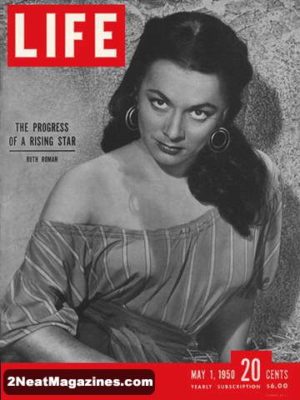
We start out our monthly focus on Ruth Roman with the genre that she was best known for: westerns.  As we discussed in our kickoff (see link above) to Roman, by 1950 (her first proper annum as a leading woman), she'd had a few years as a supporting player, and had had two big hits in 1949: The Window and Champion, after which she got a long-term contract with Warner Brothers, got the cover of Life Magazine proclaiming "The Progress of a Rising Star: Ruth Roman," and made a bevy of different films, including Dallas, our movie today starring Gary Cooper.  Like many first films in our Saturdays with the Stars profiles, Roman's role here is deceptive to her billing, with Cooper getting almost everything to do despite sharing the top of the banner with his young costar.  It's also, well, kind of an odd movie.

(Spoilers Ahead) The film focuses on Blayde "Reb" Hollister (Cooper, and yes, a moniker that could only exist in a movie), a member of the former confederacy who is such a believably good shot that even Wild Bill Hickok seems to have respect for him, whose family was killed by a group of Northerners during the war.  In the opening scenes, Hollister fakes his own death with Hickok's help, and swaps identities with Martin Weatherby (Erickson), a green-in-the-gills newly-appointed marshall who will surely soon die as he doesn't have the shooting skills or manner to take on such a job.  He got the role to impress his fiancé Tonia (Roman), whose family is being terrorized by the same family that killed Hollister's, the Marlows (headed by Massey's Will, a now "respectable" man who is still just as corrupt as ever).  As the movie unfolds, we see that Tonia is torn for her newfound lust for Reb, as well as her duty to Martin.

The film is odd in the sense that Martin never becomes a villain or ever even a proper adversary of Reb, even though he's clearly got designs on his girl.  There are moments, yes, where he basically hides Reb's papers that would exonerate him for a previous crime (freeing him up to marry Tonia), but there's not a lot of climax to that scene since it's obvious that he'll do the right thing, and he does so in quick succession.  He's certainly not the villain, as that's Massey's Will, a 1950's style nemesis as he's not only cold-blooded but also trying to be "respectable," something that as the decade would wear on would become something we'd see with more frequently-the bad guy who makes his operation legit.

Roman's part is small, as I mentioned above, but it isn't without interest.  Cooper at this point of his career had seen most of his leading man good looks, the kind that made him impossibly seismic back in the 1930's & 40's, start to fade so it's a bit unbelievable that a woman 20 years his junior would so quickly become enamored with a man who looks more like her father than her lover, but she makes the love triangle compelling.  The best part of the movie is that, while you suspect Cooper will get the girl (it's hard to imagine him letting such a thing as the final kiss slip through his contract negotiations), it's not clear the entire movie which guy Tonia will ultimately choose, and I kind of liked that for a western.  Tonia is not a great character, and I hope we'll see more from Roman as this series progresses, but she finds an intrigue in the character that I think someone else would have made one-note.  Honestly, though it feels like the sort of movie that would be easily glossed over in the filmography of an actor as important as Cooper (I don't think I'd ever heard of Dallas before picking it for this series), between the unusual plot beats, the undecided romance, the glossy Technicolor, and some fun side characters (particularly Barbara Payton's fiery "mob mol" trope-character), this isn't a bad way to spend an afternoon.

Tuesday, June 18, 2019

Gun Crazy (1950)

Film: Gun Crazy (1950)
Stars: Peggy Cummins, John Dall, Barry Kroeger, Anabel Shaw, Russ Tamblyn
Director: Joseph H. Lewis
Oscar History: No nominations
Snap Judgment Ranking: 3/5 stars

Throughout the Month of June, as a birthday present to myself, we'll be profiling 15 famous film noir movies I've never seen (my favorite film genre).  Look at the bottom of this review for some of the other movies we've profiled.


When you're watching older films, frequently something you encounter is that you have to watch the movie through an historical lens.  The film's racial or sexual or gender politics are a bit antiquated (or REALLY antiquated), and you have to attempt to judge the film based on the time period it was from, otherwise you'd only be able to appreciate films from the last five years (and those would quickly become dated as well).  There is a rarer situation, though, that occurs with movies like Gun Crazy, a picture that somehow foretold future trends, particularly the obsession with guns, sex & violence (and link them together) that would permeate movies for decades (this film is clearly an inspiration for Bonnie & Clyde) and eventually cause a nationwide discussion about the NRA and gun violence.

(Spoilers Ahead) The movie is short, coming in just under ninety minutes, but the plot is relatively brief so that's probably okay.  The movie centers around Bart (Dall as an adult, Tamblyn as a child-he's billed as "Rusty Tamblyn" here) a young man who doesn't like killing, but is still obsessed with the power he feels when holding a gun.  At a carnival event, he meets a beautiful woman named Annie Laurie Starr (Cummins) who does a sharpshooter act, and quickly they fall in love and run away from the carnival together.  However, living off love doesn't pay the bills, and as both are excellent marksmen Laurie convinces Bart to start a life of crime on the road, sticking up banks, and eventually a payroll office where Laurie kills two people (she is considerably more prone to violence than Bart, who refuses to kill anyone).  The law catches up with them in what appears to Yosemite National Park (they used a fake name for the spot in the movie).  Laurie wants to kill Bart's two childhood friends who are trying to arrest them peacefully, but before she can Bart shoots her, breaking his pledge to never shoot another living being, and then is shot down in a thickly-covered fog, their two bodies the ending of the picture.

The movie was written by Oscar winner Dalton Trumbo (during his blacklisted years) and was chosen in 1998 as part of the National Film Registry, so you know there's something there to celebrate.  Part of what makes this film so daring is some of the camerawork.  There's a really fascinating scene shot inside of the couple's car where you can see the two bickering about parking spaces on their way to the bank.  It's a strange juxtaposition of a conversation a typical married couple would have (arguing about one of their driving), but they're about to commit a potentially lethal crime.  The cameraman basically has to be in the actual backseat as the car is clearly moving (this is an era before green screen technology would allow them to be driving to nowhere), but it gives us an intimate look at their lives.

The movie's other memorable aspect has to be the complete lust that Laurie & Bart have for each other.  Their weaponry, and the power & danger they feel it brings comes across as they look at each other with the same sort of desire they feel when they peer at their revolvers.  The film is sexy (though in our current climate, a bit problematic in the way it romanticizes violence), and Dall & Cummins have never been hotter than they are here.  Cummins, in particular, is giving a hard-edged femme fatale worth remembering.  The film is slight when we aren't focusing on their carnal lust for each other and their, uhh, weaponry skills.  The side characters, like Anabel Shaw as Bart's sister Ruby, are played two-dimensionally, and while the technical aspect of the car chases and bank robberies is impressive, it's no substitution for proper character growth and plot development.  But I get why this is still celebrated, and would imagine it'd be a controversial film if it were more famous, as it's a technical achievement with some dated politics.

Previous Films in the Series: Night and the CityIn a Lonely PlaceThey Live By NightNightmare AlleyRide the Pink HorseThe KillersThe Woman in the WindowThe Big Sleep

Sunday, June 16, 2019

Night and the City (1950)

Film: Night and the City (1950)
Stars: Richard Widmark, Gene Tierney, Googie Withers, Hugh Marlowe, Francis L. Sullivan
Director: Jules Dassin
Oscar History: No nominations
Snap Judgment Ranking: 2/5 stars

Throughout the Month of June, as a birthday present to myself, we'll be profiling 15 famous film noir movies I've never seen (my favorite film genre).  Look at the bottom of this review for some of the other movies we've profiled.


We are at the exact midpoint of our series about film noir, and it's worth stating that I'm having a marvelous time here.  Film noir is by-far my favorite genre, which is why we're doing this as a birthday present to myself, but it's also a genre that it's easier for me to see past the flaws.  The desperation in the leading men, the worshiping of beautiful, talented actresses, the lighting, the scores-these are all motifs that I eat up no matter how often I see the pictures, and one could be forgiven for thinking I might be being a bit generous in my reviews.  However, Night and the City is perhaps the best example of a movie that it'd be very easy to look past the flaws.  You have some truly memorable acting, some great plot devices, but it's also kind of a mess if you don't get distracted by the shiny objects.

(Spoilers Ahead) The movie centers around Harry Fabian (Widmark), a conman around London who is always on the fuzzy end of most deals.  He has a rough relationship with his sweet, kind girlfriend Mary (Tierney), and works for a nightclub owner Phil (Sullivan) and his wife Helen (Withers), who appears to be the brains of the operation.  By chance, he finds himself in a deal with a wrestling legend who wants to start his own wrestling club, and is the only man in the city who can do it, because his son Kristo (Herbert Lom) owns the racket, but won't go against his own father.  Harry finds this to be a great deal, understanding that as long as he keeps the father around, Kristo can't touch him and he can score an easy amount of money as a wrestling promoter-he just needs the money to get started.  Meanwhile, Helen is trying to strike out on her own, leaving her fat husband for her own bar, and creates a situation where she will trick Phil into giving Harry the cash, and in the process he'll get her the money she needs to start her own club, and he'll use his seedy connections to get a license to start that club (there's also a lot of indications that she wants to sex up Harry despite hating him, but this goes nowhere).  Eventually the wrestling father dies in a fight, putting a mark on Harry's head, and Helen's plan also backfires when she tells off her husband, and then when she comes crawling back she finds out he's dead, and has disinherited her, leaving her bereft.  The film ends with Harry dying, trying to get Mary the money that is ransomed on his head, and Kristo's assassin also getting arrested.

That's a lot of plot, and it's worth noting that in a lot of ways the movie seems to be borrowing from the "no frills" approach employed by a flick like Detour.  Withers, for example, is clearly giving off a similar vibe to Ann Savage, and is the best part of the movie.  There's so much malice, cruelty, and sheer ambition that you can't fathom she won't get away with her crimes, and when she falls, essentially being put at the mercy of a washerwoman when she'd humiliated herself for years at the hands of a detestable man...it's pretty fucking bleak.  This film is right on the edge of cult-film famous/forgotten, but man if it started to play in midnight showings it'd be easy to see people becoming obsessed with Withers here.

But the actual film itself is a mess.  Widmark, typically a very fine actor, is all over the place as Harry, and instead of finding the desperation and soul of a fascinating character, he spends most of the movie instead just eating the scenery.  Tierney was suffering a severe bout of depression at the time (legend has it that she was only hired onto this movie as Jules Dassin's way to make sure she didn't kill herself), so she can be forgiven for doing almost nothing with this part, but man it's strange to see Laura Hunt herself reduced to a sniveling doormat of a girlfriend.  Dassin was about to be blacklisted, so that might have been part of the reason the movie feels so rushed, but Night and the City is one of those films that has contains many really cool elements, but doesn't work out when you gel them together.

Previous Films in the Series: In a Lonely PlaceThey Live By NightNightmare AlleyRide the Pink HorseThe KillersThe Woman in the WindowThe Big Sleep

Friday, June 14, 2019

In a Lonely Place (1950)

Film: In a Lonely Place (1950)
Stars: Humphrey Bogart, Gloria Grahame, Frank Lovejoy, Carl Benton Reid, Martha Stewart
Director: Nicholas Ray
Oscar History: No nominations, though it's generally considered a classic of the genre and was given a spot in the National Film Registry
Snap Judgment Ranking: 5/5 stars

Throughout the Month of June, as a birthday present to myself, we'll be profiling 15 famous film noir movies I've never seen (my favorite film genre).  Look at the bottom of this review for some of the other movies we've profiled.


1950 is perhaps the most famous year for Hollywood giving itself a taste of its own medicine.  The year's Best Picture race pitted All About Eve and Sunset Blvd against each other, two of the finest films ever made and both were about show business.  Eve featured the sniping world of Broadway against Blvd's cruel look at how Hollywood spits out its stars and throws them away once they can't make a profit.  Both are grand pictures, ones you can't really call yourself a film fan without seeing, but apparently there was a third such movie in 1950 that I never knew existed.  In a Lonely Place is a look at a lonely screenwriter who may or may not have murdered a young fan, but it's also a look at how fame, love, and success are tied together, sometimes in heartbreaking ways.  It's also an amazing motion picture that surely should have competed alongside Eve and Blvd that year at the Oscars.

(Spoilers Ahead-And I Mean It If You Haven't Seen This Movie, Rent or Stream, and Then Come Back) The movie is about Dixon Steele (Bogart...I'd say this is his best moniker but no movie star really had a stronger list of character names), a Hollywood screenwriter who has been down-on-his-luck for years.  He used to be quite successful, but fame & ego have gotten in the way of that, and now he's desperately in need of a hit.  We also understand at the beginning of the film that he's a violent man, someone with a short temper when he nearly pitches a fight with a man in a car after the woman in the car starts chatting with him (she's an actress who was in one of his pictures).  Steele gets the chance to adapt a novel that appears to be trash, and rather than reading it he has a hatcheck girl Mildred (Stewart) describe it for him, possibly as a way to seduce her, which she's having none of since she has a boyfriend.  The next day, the girl is found murdered, and Dixon Steele is the prime suspect.  He gets an alibi of sorts from his beautiful new neighbor Laurel Gray (Grahame), who confesses that she finds him attractive while also saying she didn't see Mildred leave with Dixon.  The film follows their romance, with the two falling in love but with Laurel worried that Dixon may have actually murdered Mildred, as he shows frequent violent tendencies and an unusual knowledge for murders, as well as a callousness about Mildred's death.

This focus on violence is what makes In a Lonely Place so riveting, petrifying, and groundbreaking.  We've focused on violence throughout this month of noir, but few films have shown it to the same degree as this picture (there will be an exception in a few days when we get to a different Gloria Grahame picture, but I won't give that away just yet).  Other than Casablanca, I don't think that Bogart has ever given a better performance that I've seen, and that's because he's allowed to really get into the violence of this character.  Dixon Steele may be a theoretical murderer, but he's an affirmed abuser.  He has a violent temper, beating people up at the drop of a hat, and is clearly obsessively controlling Laurel, driven insane by wanting to "make her his."  Whether or not he's the killer, he's still a dangerous man and one that can't possibly be good for his girlfriend, whom he berates into being his fiancé.

This all comes to a head in the movie's famous ending (which, thankfully I didn't have spoiled for me, and hopefully you've quit reading this review if you are ever going to see this movie so you won't have it spoiled for you).  Laurel decides, after Dixon nearly blinds his film agent in rage, that she's going to leave Dixon but is afraid of his reaction so she secretly packs to flee on a flight to New York.  Dixon catches her, though, and violently starts attacking her, with her screaming that she'll do anything he wants.  At this point, it almost seems like both of them aren't sure if he killed Mildred, and then a phone call comes through, stopping Dixon from potentially murdering Laurel.  We find out that Mildred's boyfriend was the killer, and that Dixon is innocent (this is the first time we've gotten proper confirmation of this-the film does nothing to assuage audience members that Dixon isn't the murderer until that point, and certainly Laurel has no way of knowing).  The movie ends on a sour note, as Laurel sees the kind of man that Dixon is, and he walks out of her life forever, his potential guilt and tangible rage already having poisoned the relationship.  It's a mesmerizing, shocking ending to a really brilliant film.  Grahame & Bogart are spectacular-both are two of the greatest actors of this era, but there's a chemistry on display here that's impossible to deny, even as it becomes toxic.  It says something that even in one of the strongest Best Actress fields ever assembled, I'd still have found room for Grahame.  The direction is assured (from Nicholas Ray, who directed They Live By Night which we saw earlier this month, as well as his most known masterpiece Rebel Without a Cause), and frequently quite inventive.  If the movie is known for anything other than the ending, it's known for the crazy fast car chase where Dixon nearly kills Laurel after discovering she spoke with the police (not of her own volition), and it's daringly directed & genuinely scary.  The script is also a stunner, with lines like "there's no sacrifice too great for a chance at immortality" and "I lived a few weeks while you loved me"...I mean, how can you not obsess over such a movie?  In a Lonely Place is a classic that has been lower case for far too long-this movie is too good to be discovered on a late night showing on TCM.


Previous Films in the Series: They Live By NightNightmare AlleyRide the Pink HorseThe KillersThe Woman in the WindowThe Big Sleep