Showing posts with label Gary Cooper. Show all posts

Saturday, April 13, 2024

Love in the Afternoon (1957)

Film: Love in the Afternoon (1957)
Stars: Gary Cooper, Audrey Hepburn, Maurice Chevalier
Director: Billy Wilder
Oscar History: The film received no Oscar nominations, which given its precursor count would number as a BIG upset by today's standards-Wilder was nominated for both the DGA & the WGA, and the film was cited for Best Picture at the Golden Globes (as well as lead nominations for both Hepburn & Chevalier).  If a film today got that, they'd be a sure thing for a few nominations from the Academy.
Snap Judgment Ranking: 3/5 stars

Each month, as part of our 2024 Saturdays with the Stars series, we are looking at the women who were once crowned as "America's Sweethearts" and the careers that inspired that title (and what happened when they eventually lost it to a new generation).  This month, our focus is on Audrey Hepburn: click here to learn more about Ms. Hepburn (and why I picked her), and click here for other Saturdays with the Stars articles.

One consistent thing that we'll see all year for this theme is that while some of the actresses we'll profile did, in fact, wait around in Hollywood for a bit before they became "America's Sweetheart," all of them pretty much had that picture, that afterward they were instantly stars.  For Audrey Hepburn, that movie was Roman Holiday, which won her an Academy Award and made her a household name.  For the next ten years, Hepburn could do no wrong, with virtually all of her movies doing well with audiences ...with only 1-2 exceptions, the biggest being today's movie Love in the Afternoon.  Why are we focusing on one of those exceptions today, you might ask?  Because, well, I didn't realize it'd flopped until after I'd watched the movie and I have seen so many of her films that I didn't think it would be wise to waste a screening.  Today, we're going to talk about arguably the highest-profile miss from Hepburn from this era, one that paired her with an icon of the previous generation (which may have been the problem).

(Spoilers Ahead) Love in the Afternoon is about Ariane (Hepburn), a young cello student who lives with her father Claude (Chevalier) in Paris.  Claude is a private detective, one who makes his living investigating the crumbling romances of the various men of Paris, many of whom are losing their wives to a lothario named Frank Flannagan (Cooper).  When a client threatens to kill Frank, Ariane intercepts, and manages to save his life...but in the process she becomes enamored with him.  Having read about his escapades for years in her father's notes, she is able to manipulate him, pretending to be a worldly sophisticate and someone he can easily romance without strings attached (this is basically "friends with benefits" for the 1950's), but she's in fact deeply in love with him.  When he becomes jealous of all the men she's "been with" he goes to her father's detective agency...at which point her father realizes what's happened.  He wants him to dump her, knowing that he will break her heart, but at the end (in a romantic train station goodbye), they embrace, and the closing narration shows that she finally tamed the playboy, and made him her husband.

Audrey Hepburn, similar to Grace Kelly, spent much of her acting career being romanced by older men.  Humphrey Bogart was 30 years her senior, Rex Harrison 21 years older, Cary Grant was 25 years older, and Fred Astaire, again, was 30 years older than Hepburn.  There are a lot of guesses as to why Hepburn & Kelly, specifically, were asked to do this, but it was largely because Hollywood had a lot of over-the-hill actors who were still somewhat bankable & they didn't think audiences would continue to see them if they continued to romance women their own age like Bette Davis or Barbara Stanwyck.  This wasn't always a problem for Hepburn-you watch films like Sabrina, My Fair Lady, Charade, & Funny Face, and she plays really well against these guys, using their screen personas and her youthful whimsy to full advantage.  This is why she made so many good movies, as she was the rare romantic lead who could compliment these men's star persona so beautifully, even with an age difference.

But that did not manifest with Gary Cooper.  Love in the Afternoon is a good movie, mind you.  There's a solid script here, even if it should probably be funnier, and the premise works really well.  It's Gary Cooper's casting, though, that doesn't click.  Cooper is not my favorite actor, but in his best roles he did two things well-he was very good as an honorable man stuck in a tough situation and he was really good at playing an idiot being outmaneuvered by a smarter woman.  The script doesn't play into the first part at all, and doesn't really lean into the latter well enough.  Cary Grant was the first choice for this movie, and would've been much better, as in many ways this foreshadowed their work in Charade (which unlike this, was a massive hit).  Cooper & Hepburn, both screen stars in their own right, don't work together, and it's hard to put any of the blame on Hepburn, playing this role decently.  The scenes she has with Maurice Chevalier, for example, are quite light & melodious.  A missed opportunity, and a shame that all of these flashy names couldn't pull together a better picture.

Saturday, December 30, 2023

2023 Saturdays with the Stars Recap

Yesterday we finished up our month with Kris Kristofferson, and today, we are putting the final cap on our "When Cowboys Ruled Hollywood" season.  I will totally own this, our fifth season, is probably my favorite season we've done since Season 2 (when we tackled sex symbols), and maybe my favorite ever.  I knew going into this that westerns have always been one of my favorite genres, and getting to see such a wide array, including a lot of hidden gems that have been on the To Do list for a while, was an absolute treat.  But I didn't realize how many of the films would end up being downright classics, from Sergio Leone's Dollars trilogy to some of the gorgeous westerns that Anthony Mann made with Jimmy Stewart, there are movies on this list that have quickly catapulted to my favorite westerns list, and I have even added a few already to my home collection.

The biggest thing that excited me, though, was how this really ended up being the tale of Hollywood, starting with The Big Trail and ending with Heaven's Gate, and how much of Classical & New Hollywood came in-between.  This has been the case in all of our seasons, but seeing it through the most American of genres, the western, it felt like I was hearing it for the first time.  We'll get into our sixth season, where we will be "Crowning America's Sweethearts," on Saturday, but one last time, take a look at some of the best from this season of "When Cowboys Ruled Hollywood."

Favorite Performance from Each Star 

January: Gary Cooper, Man of the West
February: James Stewart, The Naked Spur
March: Gregory Peck, The Gunfighter
April: Marlene Dietrich, Witness for the Prosecution
May: Randolph Scott, Ride the High Country
June: Yul Brynner, Westworld
July: John Wayne, The Shootist
August: Franco Nero, Querelle
September: Clint Eastwood, The Good, the Bad, and the Ugly
October: Robert Redford, Barefoot in the Park
November: Sam Elliott, Molly and Lawless John
December: Kris Kristofferson, Alice Doesn't Live Here Anymore

5 Favorite Performers (Alphabetical, and based solely on the films we watched as a collective & not on the rest of their careers)


5 Favorite Performances of the Year (Alphabetical)


12 Favorite Films of the Year (Alphabetical)


Top 12 Performances of the Year (Not By Our Stars...and Yes, Alphabetical)

Dan Duryea, Winchester 73
Mariette Hartley, Ride the High Country
Burl Ives, The Big Country
Elsa Lanchester, Witness for the Prosecution
Charles Laughton, Witness for the Prosecution
Lee van Cleef, For a Few Dollars More

Saturday, January 28, 2023

Man of the West (1958)

Film: Man of the West (1958)
Stars: Gary Cooper, Julie London, Lee J. Cobb, Arthur O'Connell
Director: Anthony Mann
Oscar History: No nominations
Snap Judgment Ranking: 4/5 stars

Each month, as part of our 2023 Saturdays with the Stars series, we are looking at the Golden Age western, and the stars who made it one of the most enduring legacies of Classical Hollywood.  This month, our focus is on Gary Cooper: click here to learn more about Mr. Cooper (and why I picked him), and click here for other Saturdays with the Stars articles.

Gary Cooper never really stopped being famous, or working in major movies.  While other actors of his generation would eventually be relegated to television, this wasn't the case for Cooper, who worked pretty much until his death in 1961.  Cooper never escaped the shadow of Will Kane, his famed cowboy in High Noon, and played some version of him throughout the 1950's, including in today's film Man of the West, which was nearly his last western (we've actually discussed his final western, which is one of his best roles in my opinion, The Hanging Tree, a few years ago).  He was always forced to play the man-of-honor in the west, someone who was up against the odds.  Here, though, the seedier elements honestly make that conversation far more interesting, as Man of the West is that rare hybrid genre: the western noir.

(Spoilers Ahead) The film is about Link Jones (Cooper), who is a former outlaw that has gone on the straight-and-narrow and is tasked with bringing money to Fort Worth to hire a new schoolteacher for his town of Good Hope.  On the way, his train is hijacked, and he, another cowboy named Sam (O'Connell), and a saloon singer named Billie (London) are all forced off of the train, and start walking to town (the money for the teacher is still on the train).  At this point, Link goes to meet with his old gang, which happens to be his family, including his uncle Dock Tobin (Cobb), whom he abandoned years earlier.  He is blackmailed into rejoining the gang, and in the process his hope is to kill them for ruining so much of his early life.  He does this, eventually killing everyone in his old gang, with him riding off into the sunset with Billie.

The film plays with a lot of tropes, including the concept of honor.  Link is a good man.  This might be the only time that a man spends the night with another woman but doesn't have sex with her in a movie of this nature (Link knows in order to protect Billie from the men, he has to pretend she's "his woman" even though he's married and loves his wife).  As a result, the age gap between Cooper & London (who was was 25 years his junior) reads more as paternal than romantic, even though her character is clearly in love with him.  It also is a strange juxtaposition to Cooper as honorable-he seems to want to kill his relatives out of revenge, which is usually something that a hero must overcome, and in a way he does, but even so he does, in fact, kill all of them in the end (having his cake & eating it too).  This moral grey area would become increasingly a part of the western in the decade to come, with movies like The Man Who Shot Liberty Valance, Once Upon a Time in the West, and eventually The Wild Bunch smashing tropes that The Virginian and Stagecoach had made gospel in Hollywood for decades.

The movie also looks & sounds incredible.  Shot on CinemaScope by cinematographer Ernest Haller (of Gone with the Wind fame), the Mojave Desert makes an implausible but gorgeous Texas in Man of the West, and a judiciously-used score means we get scenes that actually sound like the vastness of the west.  Think of the scene where Cooper approaches London's attacked wagon, and how you can hear the whistle of the wind instead of a score...that's smart, atmospheric stuff.  The art direction, the editing...it's weird this didn't get some sort of Academy mention.  Even the acting is good.  Cobb plays his villain in heavy-but-convincing old age makeup, and is superb.  I loved the way that you can't tell what he's thinking, and how that adds to his villainy.  London is also good as a woman in love with a man she can't have, and at least hinting that part of the reason she loves him is because she wants out of a life where she's only as valued as the leers of the men who want her for a night, a life she's resigned to as the end credits fall.

About the only thing I'm not totally sold on is our Star of the Month, Mr. Cooper himself.  I started this month with the caveat that Cooper is one of those rare major Golden Age stars that does little for me, and I end there despite trying four new films.  I get the appeal on some level.  There are silent moments in this movie where Cooper's clear blue eyes convey a sense of emotion, a brokenness that definitely has talent.  But his wooden physicality and his stilted line delivery just does nothing for me as we explore him in different genres, and particularly in a very good film like Man of the West.  All of this is to say, we're hedging our bets in February by picking one of my all-time favorite actors to discuss next month.

Saturday, January 21, 2023

Vera Cruz (1954)

Film: Vera Cruz (1954)
Stars: Gary Cooper, Burt Lancaster, Denise Darcel, Cesar Romero, Sara Montiel
Director: Robert Aldrich
Oscar History: No nominations
Snap Judgment Ranking: 2/5 stars

Each month, as part of our 2023 Saturdays with the Stars series, we are looking at the Golden Age western, and the stars who made it one of the most enduring legacies of Classical Hollywood.  This month, our focus is on Gary Cooper: click here to learn more about Mr. Cooper (and why I picked him), and click here for other Saturdays with the Stars articles.

I promised last week that I would talk this week about the personal relationships of Gary Cooper's life.  Cooper's personal life at this point has taken on a persona of its own.  Before his marriage in 1933 to actress Veronica Balfe (whom he would remain married to until his death in 1961), Cooper famously bedded half of Hollywood, including (allegedly) actresses Clara Bow, Carole Lombard, Marlene Dietrich, and most critically, actress Lupe Velez.  Velez, who at one point was the rare Latina leading lady of the Classical Hollywood Era, who killed herself after her career waned and she became pregnant while unmarried, is the source of the infamous (and cruel) urban legend that she died vomiting on a toilet.  In the decades since, there have been rumors that a rekindled romance with Cooper was the source of the baby, and his refusal to leave his wife & marry the devoutly Catholic Velez (who refused to get an abortion) was the reason that she killed herself.  Weirdly Velez isn't the only woman who has had her suicide associated with Cooper-costume designer Irene killed herself a year after Cooper's death, purportedly out of grief as the two had been having an affair.

A more substantiated Hollywood legend, and one that is associated bleakly with Cooper's memory, is his relationship with actress Patricia Neal.  While Cooper had (alleged) affairs throughout his marriage with actresses ranging from Ingrid Bergman to Grace Kelly, Neal publicly discussed the relationship, including the abortion that Cooper pressured her to have, and which she would later deeply regret, becoming an ardent supporter of the "Pro-Life" movement.  Another rumor about Cooper's personal life was that he was secretly bisexual, and his connection with actor Anderson Lawler, who was gay, is the name most frequently associated with these rumors.

(Spoilers Ahead) All of this is far more interesting than the movie we're discussing today, the 1954 western Vera Cruz, which happened in the wake of Cooper's second Oscar win for the western classic High Noon.  That film largely serves as a bookend to the success that the actor had had for 20+ years to that date, and also moved him into an era of diminishing returns as a star.  Vera Cruz is emblematic of the types of roles he would take during this time frame, frequently playing an older man competing with a younger figure or trying to rely upon his long-time reputation for "one last ride."  Here he is Ben Trane, who joins forces with the wily young gunslinger Joe Erin (Lancaster) to escort a countess (Darcel) to the city of Veracruz, Mexico, but along the way they realize they're also transporting $3 million in gold.  The film then proceeds to comic lengths to show how Joe & Ben will go about trying to backstab each other, with the more noble Ben winning out of the two.

The movie doesn't work for a couple of reasons.  For one, it's supposed to be funny, but it doesn't have enough jokes.  It's clear this was an early predecessor to the Spaghetti westerns of the late 1960's (which is one of my favorite eras in Hollywood, which made my antipathy toward this film disappointing), but it doesn't have the melodrama & stakes of those films.  Lancaster & Cooper also don't work together.  Neither of these two are actors I love, but together they don't balance at all-Lancaster has a tendency to overact in movies like this, while Cooper was usually dry, and needed costars who would let that shine through.  Together, Lancaster totally overpowers Cooper to the point where it feels like he's not in the movie, which is a problem since he's the hero.  Pairing Lancaster with someone with more charisma (like Clark Gable) or Cooper with someone more introspective (like Montgomery Clift) would've been better...or you could just watch Gable & Clift in The Misfits, a much better movie.

Saturday, January 14, 2023

OPV: The Pride of the Yankees (1942)

Film: The Pride of the Yankees (1942)
Stars: Gary Cooper, Teresa Wright, Babe Ruth, Walter Brennan, Dan Duryea, Elsa Janssen
Director: Sam Wood
Oscar History: 11 nominations/1 win (Best Picture, Actor-Gary Cooper, Actress-Teresa Wright, Art Direction, Cinematography, Special Effects, Film Editing*, Score, Sound, Motion Picture Story, Adapted Screenplay)
Snap Judgment Ranking: 3/5 stars

Each month, as part of our 2023 Saturdays with the Stars series, we are looking at the Golden Age western, and the stars who made it one of the most enduring legacies of Classical Hollywood.  This month, our focus is on Gary Cooper: click here to learn more about Mr. Cooper (and why I picked him), and click here for other Saturdays with the Stars articles.

Last week we talked about how Gary Cooper became a star with The Virginian, but this week we're going to talk a little about how he became a legend.  Cooper is an odd conundrum for modern cinephiles, partially because as an actor he (despite two Oscars) isn't everyone's cup of tea.  The stoic handsomeness was frequently miscast, and while he has his legendary roles (specifically High Noon), much of his legendary years in Hollywood are forgotten or haven't aged as well.  But from the mid-1930's (when he did Mr. Deeds Goes to Town and won his first Oscar nomination) to the mid-1940's Cooper was about as untouchable as you could get in Hollywood, and frequently took on the role of outsized hero.  He did this while having a very colorful personal life (which we're going to explore more fully next week) bedding half the women in Hollywood.  One of the legendary roles that Cooper undertook during this time was of Lou Gehrig who had died the year before from the disease that was eventually named after him in The Pride of the Yankees.  That's the movie we're covering today.

(Spoilers Ahead) The movie is a relatively traditional biopic focusing on Lou Gehrig's (Cooper) life, the son of German immigrants who wanted a better future for him, but one through education.  However, Gehrig's incredible talent for baseball becomes too impossible to deny as the film progresses, and he's recruited to the New York Yankees, where he become a star to rival Babe Ruth (played, somehow, by the real-life Ruth who had been retired for seven years at this time & had to lose a significant amount of weight before he could play himself).  He also falls in love with a woman named Eleanor (Wright), who is the sweet girl next door who has to fight his domineering mother until Lou steps in.  After an unparalleled career in baseball, Gehrig was diagnosed with what we now know is ALS (aka Lou Gehrig's Disease), and must step down from baseball as he will be unable to be alive much longer after retiring, and the movie ends with him retiring with the famous "I'm the luckiest man on the face of the earth" speech which is what you instantly know this movie from even if you've never seen it.

In 1942, Lou Gehrig would've been as famous as LeBron James would be today, and so weirdly the film focuses relatively little on his baseball feats, which are impressive, save for his incredible consecutive games played streak that Cal Ripken broke in 1995 (fun personal fact-one of the only sports memories I have with my dad, as I was not a sport-watching child, was watching Cal Ripken break that record on the tiny 13-inch TV in our basement, as my dad insisted my brother & I watch it as it was a record that would stand forever).  This decision is a mistake-Gehrig's life was pretty picturesque, at least from what we see in the movie, and given the real-life Ruth is playing himself here, they totally skip over the two legend's complicated relationship with one another (including allegations that Ruth slept with Gehrig's wife before she married Gehrig).  Even by the definition of a biopic of this era, this movie is incredibly vanilla, bordering on propaganda to Gehrig's memory.

That said, I loved the last fifteen minutes of this movie, and it made me wish the rest of the movie had earned them.  There's something so beautiful about what Cooper does with Gehrig, knowing he's dying, and both the little boy (who earlier in the film was said he wouldn't walk again) going up to a stoic Gehrig & saying he did, in fact, walk, and then the farewell speech...it's a beautiful ending, and feels like a lovely testament to the way that we all have to, eventually, play our last game.

The film won 11 Oscar nominations, making it one of the only remaining films that has received 11+ Oscar nominations that I've never seen (just Gandhi and Becket can out do it on my missing OVP titles list).  Cooper is too old for this part, and feels too mundane up until those last fifteen minutes when he (pardon the expression) knocks it out of the park.  Teresa Wright's Best Actress nomination is weird, both because she's given nothing to do and because there were better options that year (hello-Carole Lombard in To Be or Not to Be!).  The story concept is arguably better than the tepid screenplay, but neither are breaking much new ground, and while I liked the sound in the last ten minutes, there's nothing noteworthy about the rest of the film.  The art direction is standard-fare...you never actually feel like you're at Yankee Stadium in the movie, but just a sound stage.  The editing is arguably the film's best element, which is what it won its Oscar for, because it does do a decent job of showing the passage of time, but it's nothing compared to something like Citizen Kane or Now, Voyager that year.  The cinematography is noteworthy because of the lighting effects that were used to try to de-age Gary Cooper...which barely work.  This is true of the Special Effects, which is a truly weird nomination because other than some matte screens behind Cooper, there's nothing special about these effects other than the lighting.  There are apocryphal stories that Cooper (who was right-handed in real life, unlike the famous southpaw Gehrig), had to have trick photography to recreate certain baseball scenes, which would be impressive for the time, but research indicates that at best happened in one brief scene, and not most of the baseball scenes where Cooper learned to bat as a lefty.

Saturday, January 07, 2023

The Virginian (1929)

Film: The Virginian (1929)
Stars: Cary Cooper, Walter Huston, Richard Arlen, Mary Brian, Helen Ware
Director: Victor Fleming
Oscar History: No nominations
Snap Judgment Ranking: 3/5 stars

Each month, as part of our 2023 Saturdays with the Stars series, we are looking at the Golden Age western, and the stars who made it one of the most enduring legacies of Classical Hollywood.  This month, our focus is on Gary Cooper: click here to learn more about Mr. Cooper (and why I picked him), and click here for other Saturdays with the Stars articles.

Gary Cooper's early years in Hollywood in Silent Era pictures were actually more successful than you'd think given how quickly he took off in the Sound Era.  This is partially because he was savvier & knew his value right away.  It's rare when you read about a star of this era that ended up being a big deal turning down a contract (usually that's something you lived to regret), but he did, turning down Samuel Goldwyn and signing a long-term contract with Paramount for more money, which was smart.  Cooper would star in big hits of the Silent Era like Lilac Time and Wings, the latter the first film to win the Best Picture Oscar.  But really,  while he was developing a fan base (mostly of women starstruck by how gorgeous the young Cooper was), it wasn't until The Virginian, his first sound film, that Cooper's star persona as the noble lawman was established, and that he graduated to being one of the biggest names in pictures of the early Sound Era, specifically in Westerns.

(Spoilers Ahead) The movie has two men, the Virginian (Cooper) and Steve (Arlen), who are long-time friends who help run a ranch and are soon rivals for the affections of a local school teacher named Molly Stark Wood (Brian).  They enjoy playing pranks together, including one where they swap the babies at a christening to confusing (and admittedly funny consequences).  But Steve is working a side hustle for Trampas (Huston), a local cattle hustler that eventually gets him into enough trouble that he's caught stealing cattle, which is a trick that Trampas plays on his nemesis the Virginian because he knows the punishment will be Steve being hanged by the Virginian (which he is).  Initially this causes issues in his relationship with Molly, but she forgives him, agreeing to marry him...though of course we have to have one last showdown between Trampas & the Virginian to end the picture (the good guy wins).

That might sound like a standard-issue western plot, and it is, but it's worth remembering that this film (and the book it's based on) kind of created this plot.  Owen Wister's The Virginian is considered by most literary historians to be the first fictional western novel ever written, and is foundational to the genre.  This was actually the third remake of the story (the first was from 1914 and directed by Cecil B. DeMille).  It works well, honestly.  The cinematography & editing are both solid, and you can see how westerns for the next decade would borrow from this (until Stagecoach would perfect the cliches this movie wrought).  I liked some of the supporting characters the best.  Huston is great as a nasty villain, and Helen Ware is strong in a small part as a knowing old woman, giving Molly a lecture about how provincial she's being about the ways of the West, many of which she's using as an excuse not to fall for the Virginian.

Cooper is good in the part, though I will say he doesn't add a lot to it.  We're going to struggle a little bit with Cooper this month because he's such an introspective actor that I sometimes find him to be lazy onscreen, as if he's letting his jarring handsomeness, dulcet baritone, and lanky frame carry most of the work.  Cooper looks great, his eyes caked in mascara that only makes him appear prettier, and I liked his line reading of the film's most famous quote ("if you're going to call me that...smile"), but I don't feel like he creates enough myth about a figure that's supposed to be unknown.  We have a lot more Cooper this month, but my hope is that at least one movie becomes "definitive" for me about him that isn't one I've already seen.

Sunday, January 01, 2023

Saturdays with the Stars: Gary Cooper

Each month of 2023 we are taking a look at a star who made their name in westerns, rustling cattle & riding horses during the brief time when cowboys ruled Hollywood.  To start things out, we are going to focus on a figure who was a leading man virtually the entire run of Classical Hollywood, from humble beginnings in the early 1930's right up until his death in 1961.  While he would star in virtually every genre imaginable, frequently to critical & commercial success, modern audiences know him best as Sheriff Will Kane, the man without a friend who is facing a ticking clock to his doom in one of the quintessential westerns of the 1950's, High Noon.  This month's star is Gary Cooper.

Born in Helena, Montana to the son of English immigrant ranchers, Cooper's young life hardly seemed the place for a future actor.  But a chance meeting with a rodeo champion who worked in Poverty Row westerns changed his life.  Desperate for money, he moved into extra work and played in stunts & as a young, handsome lover in a number of films before finally creating The Virginian, which was a smash hit film for Paramount and would become the first major western of the Sound Era.  Cooper's tall, lanky frame and striking face was perfect for westerns, and indeed, he'd spend the next thirty years headlining marquees.

Gary Cooper is an interesting choice to start this run with, even if he's an obvious option.  An actor of his caliber who spent decades making westerns, including one as important to the future of the genre as The Virginian (and a movie as steeped in lore as High Noon), seems inevitable for this series.  But Cooper is a star I struggle with, and have never really found my footing with-he is good-looking (bordering on the beautiful), but I don't feel a connection with him.  In past seasons I've found actors that I didn't realize I could love, and I'm hoping that happens this month.  As I said when I kicked off this series, we're going to mix both western & non-western roles from Cooper, including one of his Oscar-nominated turns, and I'm hopeful that I will soon realize why audiences made Cooper one of the biggest names of the Golden Age. 

Saturday, December 17, 2022

OVP: Ball of Fire (1941)

Film: Ball of Fire (1941)
Stars: Gary Cooper, Barbara Stanwyck, Dana Andrews, Oskar Homolka, SZ Sakall, Henry Travers, Dan Duryea
Director: Howard Hawks
Oscar History: 4 nominations (Best Actress-Barbara Stanwyck, Score, Sound, Motion Picture Story)
Snap Judgment Ranking: 3/5 stars

Each month, as part of our 2022 Saturdays with the Stars series, we highlight a different Classical Hollywood star who made their name in the early days of television.  This month, our focus is on Barbara Stanwyck: click here to learn more about Ms. Stanwyck (and why I picked her), and click here for other Saturdays with the Stars articles.

We are running behind again this month (I'll try to be more timely in 2023, as we'll be kicking off our fifth season in the next week), but I'm going to attempt to do two Stanwyck movies today and get ahead of her films in the coming days so we have a full five movies in December (she's too big of a star to skip one of our Saturday's).  We're going to start with a conversation about 1941, inarguably the best year of Barbara Stanwyck's career.  We last left Stanwyck with Baby Face, which was a hit during the Pre-Code era for its saucy content, but by the early 1940's Stanwyck didn't need gimmicks to get people into their movie seats-she was a headliner in every aspect.  She got her first Oscar nomination for the 1937 weepie Stella Dallas, and despite not having a studio contract during this era, was in such demand (and so well-respected) that she was cranking out major hits, including three iconic ones in 1941: The Lady Eve, Meet John Doe, and Ball of Fire, for which she won her second Oscar nomination and which is our film today.

(Spoilers Ahead) The movie has a rather preposterous setup for a romantic comedy, even by rom-com standards.  Gary Cooper plays Bertram Potts, a grammarian who along with a number of other dotty professors (seven, to be exact, mirroring the seven dwarves), are writing an encyclopedia.  Through a chance encounter, they come across Sugarpuss O'Shea (Stanwyck), a nightclub performer who is involved with a gangster named Joe Lilac (Andrews).  As Lilac is wanted by the police, she goes into hiding for a few days to stay out of sight, during which time she stays with Potts, who is studying her vernacular to try to include modern slang in the encyclopedia.  They start to fall for each other, but Sugarpuss has a problem-Lilac wants to marry her, not out of love but so she can't testify against him, and he eventually kidnaps all of the professors to blackmail her into it.  Thankfully, through ingenuity, they free themselves, save the day, and Bertram & Sugarpuss end up together.

The movie is cute, as cute as you'd assume given those involved and the silliness of the plot.  Though they're all interchangeable, the old men who are, even in their advanced age, shellshocked by the appearance of a beautiful woman and encouraging of the relationship Bertram can have with her, steal a lot of scenes.  The movie, though, never rises to the level of a classic-this is a good movie, not a great one, not as sharp as it should be or quite as funny as it ought to be (it's not The Philadelphia Story).  I think, like so many films like this of the era, the nominations for Sound & Score are fine.  There's nothing special there, but it got in because everyone else did (they would have over 20 nominees in some categories, including in Best Score for Ball of Fire's year, so a lot of middling amongst the genius).  The Story nomination makes more sense, especially over screenplay, as the idea behind it is far cuter than the execution.

With Stanwyck & her "year of classics," while I will admit that The Lady Eve is the best of these three (both in terms of the actual movie and in terms of what Stanwyck was doing onscreen), Ball of Fire is some great stuff from Stanwyck.  She plays well off of an against-type Cooper, and has such sass & pizzazz that this would've made a fine win for her.  I partially wonder if Stanwyck missed with Oscar overall because she didn't have a studio rooting for her to get a trophy in the way that Ginger Rogers or Jennifer Jones would've in the same era, but in 1941, I honestly think the only people who were going to take trophies were the De Havilland's.  Oscar made a huge stink about Olivia & Joan competing against each other, and it delivered in both of their star legends for the decades to come as the sisters...did not handle it well when the younger Joan beat her big sister for the statue.

Saturday, October 15, 2022

OVP: Sergeant York (1941)

Film: Sergeant York (1941)
Stars: Gary Cooper, Walter Brennan, Joan Leslie, George Tobias, Margaret Wycherly
Director: Howard Hawks
Oscar History: 11 nominations/2 wins (Best Picture, Director, Actor-Gary Cooper*, Supporting Actor-Walter Brennan, Supporting Actress-Margaret Wycherly, Original Screenplay, Art Direction, Cinematography, Film Editing*, Score, Sound)
Snap Judgment Ranking: 2/5 stars

Each month, as part of our 2022 Saturdays with the Stars series, we highlight a different Classical Hollywood star who made their name in the early days of television.  This month, our focus is on Walter Brennan: click here to learn more about Mr. Brennan (and why I picked him), and click here for other Saturdays with the Stars articles.

Walter Brennan only lost one Oscar in his whole Academy career.  By 1941, it had become something of a running joke with the Academy giving Brennan trophies every year.  His statue for The Westerner, in particular, was considered a big upset against films like Foreign Correspondent and The Great Dictator which had gotten more Academy love.  His one loss, oddly enough, came for the film that would be the most-lauded of his quartet of nominations, and indeed perhaps the most honored film (in terms of Oscar) of Brennan's whole career: Sergeant York.  Made in 1941, Sergeant York was a gargantuan hit, getting Warner Brothers the #1 movie of the year, and was nominated for 11 Oscars, making it one of the frontrunners for the trophy that would eventually go to How Green was My Valley (and famously not Citizen Kane).  This is also a weird collective moment for me, as this is one of the first original "extended" lineups that I have finished watching for Best Picture (the plethora of Best Song & Score nominations those years cover up that I've seen most of the major movies of 1941).  I was intrigued given its reputation as one of the signature war films of this era what Sergeant York would end up looking like as I finished up both Oscar's Best Picture lineup that year and their romance with Brennan, who despite working another 25 years in Hollywood would never be cited again.

(Spoilers Ahead) The movie is unusual for a war film in that it focuses for most of the movie on Alvin York's (Cooper) life outside of World War I.  We see his humble beginnings, first as a wastrel who is raised by a pious mother (Wycherly) who then finds god under the guidance of Pastor Pile (Brennan), and aspires to make a life for himself on a farm.  When World War I breaks out, he enlists, though before that he becomes engaged to his sweetheart Gracie (Leslie), and though he is a conscientious objector at first on religious grounds, decides ultimately to become a soldier who uses his gun.  This invites an outstanding act of bravery, where he holds the line singlehandedly against the Germans, and takes dozens of them prisoner with only a few of his fellow American soldiers.  He is awarded dozens of medals for this, including the Medal of Honor, but his greatest reward is getting to go home to Gracie, get married, and start a family on the farmland he spent the first half of the movie trying to buy.

It's hard for people today to realize, but in 1941 Alvin York was something of a household name.  Much of the bravery exhibited in this movie (and the honors he received after) was based on actual fact-York would become one of the most decorated US Army soldiers of World War I.  Particularly in the midst of World War II, a dose of patriotism was probably not a hard sell for theatergoers who wanted to see an American hero on the big-screen.  The problem for me with the film, though, is that it's unfathomably boring for the first 90 minutes of its run.  The scenes that are at-home with York drag and while the war scenes themselves are quite thrilling & interesting (York became a legend for a reason-this is fascinating stuff), they feel like an almost afterthought on the movie.  The war parts keep it from getting a 1-star situation, but man is the rest of this dreadful.

The film won 11 nominations, and for-the-most part they're a bust.  The best aspect of the film is probably the art direction, as the bunkers look quite well-constructed, and give you a sense of the closeness to danger York was encountering, and how these men lived...though that's again just for 15 minutes or so of the picture.  The Sound, Score, & Cinematography are routine-you couldn't find anything much different than any other picture of the era, and I dare you to find anything interesting about it.  The Editing has not so much as a fascinating cut (even in the war scenes)...this beat Citizen freaking Kane?  Come on now Oscar.  The script is tired, the direction lousy (Howard Hawks, the man who made genuine classics like Bringing Up Baby, Rio Bravo, Scarface, Red River, and Gentleman Prefer Blondes got his sole directing nomination for this)?  And the performances are a snooze.  Brennan doesn't even get to have some of his goofier comedy bits in this, and Wycherly looks like she's on novocaine the entire film-apparently you could win an Oscar nomination just by standing and looking penitent for the run of your movie in 1941.  Gary Cooper, whose acting style is more miss than hit for me, is not Will Kane here-this is a one-note piece of work, and don't get me started on something thinking this is better than what Orson Welles was doing that same year.

Saturday, June 11, 2022

OVP: Meet John Doe (1941)

Film: Meet John Doe (1941)
Stars: Gary Cooper, Barbara Stanwyck, Edward Arnold, Walter Brennan, Spring Byington, James Gleason
Director: Frank Capra
Oscar History: 1 nomination (Best Motion Picture Story)
Snap Judgment Ranking: 3/5 stars

Each month, as part of our 2022 Saturdays with the Stars series, we highlight a different Classical Hollywood star who made their name in the early days of television.  This month, our focus is on Spring Byington: click here to learn more about Ms. Byington (and why I picked her), and click here for other Saturdays with the Stars articles.

Last week we talked about Spring Byington's long success in The Jones Family films, a B-Picture comedy series that is almost completely forgotten today despite 17 films being made in the franchise.  During the time that she was making The Jones Family, though, Byington was working on more serious or better-remembered films.  One of those movies was You Can't Take It With You, which won her her only Oscar nomination.  Despite the film being a Best Picture winner, Byington lost that statue to Fay Bainter, and I have seen it multiple times (you can read my review of it here) so it wouldn't be eligible for this month's series (all of the screenings for Saturdays with the Stars are "new to me" viewings).  But I wanted to acknowledge this period of her career, and lo-and-behold, Frank Capra (who liked to repeat his actors) made another well-regarded film a few years after You Can't Take It With You called Meet John Doe, which is our movie selection for today.

(Spoilers Ahead) The movie is about a newspaper reporter named Ann Mitchell (Stanwyck), who is being fired from her job as part of a recent merger from noted millionaire DB Norton (Arnold).  In her final article, she makes up a man named "John Doe" who proclaims he is going to jump off of city hall on Christmas Eve because he is protesting society's ills.  The news story goes, to use modern parlance, "viral" and Ann is hired back to profile the guy...but the problem is he doesn't actually exist.  Ann & her editor Henry Connell (Gleason) do a casting call, and find Long John Willoughby (Cooper), a former baseball player who has become a railway tramp to take the job.  Despite the protestations of his friend the Colonel (Brennan), he does the job to get money to fix his arm so he can play baseball again, and he begins to make a pitch for a kinder, more decent America where we are friendly to our neighbors, and says that's what it'll take for him not to commit suicide.  When the John Doe movement catches on, becoming insanely popular, Willoughby & Ann find out that the whole movement, which has been paid for by Norton, is a sinister plot to launch the millionaire's presidential career, using Willoughby's goodwill endorsement as leverage to a campaign.  After Willoughby refuses, Norton outs him as a conman, and soon the John Doe Movement comes tumbling down.  Willoughby then finds himself actually trying to commit suicide on Christmas Eve, but before he can both Ann and members of the remaining John Doe clubs beg him to stop, saying that this movement is now bigger than him or Norton.  He stops, and he & Ann walk off together into the Christmas night.

Frank Capra liked to repeat himself, and just based on that description, you'll assume (correctly) that this is just an amalgamation of Mr. Smith Goes to Washington and the soon-to-come It's a Wonderful Life.  While generally well-regarded, this is not considered in the same league as those movies by most modern cinephiles, and for my money it's because it's a bit mucky in its politics.  It's hard to imagine the deeply conservative Barbara Stanwyck signing off on a script that is pro-union & honestly has something of a socialist message, with neighbors giving their fellow citizens part of their money or a job when they're down on their luck...this film would give Tucker Carlson a heart attack.  But it's also a bit of American propaganda, heavily implying it's the pluck & determinism of the "common" American people (and notably it's white people-the only people of color we see are servants, and not part of the "John Doe" clubs) that causes this grit.  Let's just say that the film's politics are messy, and kind of deter from the more clear-cut messaging of Mr. Smith and Wonderful Life.

The film is otherwise fine.  Stanwyck is the standout, but Cooper & Arnold are also serviceable in these roles.  Stanwyck & Cooper were having big years: they both made Ball of Fire together (for which Stanwyck was nominated for an Oscar), Stanwyck was making the comedy classic The Lady Eve with Henry Fonda, and Cooper was winning his first Oscar for the biggest film of the year, Sergeant York.  Not too shabby.  You'll notice I haven't mentioned our star Spring Byington, and that's because she's not in much of the movie.  She plays Stanwyck's overly sweet mother (John Doe's spirit was largely an extension of Ann's generous-to-a-fault parents), and is only in like 3-4 scenes.  Her best scene is late in the picture with Cooper, where she convinces him that he needs to ask Ann to marry him, as she knows (even if Ann doesn't yet) that Willoughby is in love with her daughter.  Byington has a bit of melancholy in this scene (knowing she's about to lose her daughter to the next stage of her life, and as a result will enter the last stage of hers) that I really liked, and showed how she was the kind of actress who made an impression even with the smallest of parts.

Saturday, July 03, 2021

OVP: For Whom the Bell Tolls (1943)

Film: For Whom the Bell Tolls (1943)
Stars: Gary Cooper, Ingrid Bergman, Akim Tamiroff, Katina Paxinou
Director: Sam Wood
Oscar History: 9 nominations/1 win (Best Picture, Actor-Gary Cooper, Actress-Ingrid Bergman, Supporting Actor-Akim Tamiroff, Supporting Actress-Katina Paxinou*, Cinematography, Art Direction, Film Editing, Score)
Snap Judgment Ranking: 1/5 stars

Each month, as part of our 2021 Saturdays with the Stars series, we highlight a different one Alfred Hitchcock's Leading Ladies.  This month, our focus is on Ingrid Bergman-click here to learn more about Ms. Bergman (and why I picked her), and click here for other Saturdays with the Stars articles.

As we mentioned when we introduced our month devoted to Ingrid Bergman, the actress got her start in Swedish cinema in the earliest part of her career, but moved to Hollywood in 1939.  She didn't speak English well, and initially assumed that Intermezzo would be her only American film before returning back to Sweden.  However, Intermezzo was a big hit, and David O. Selznick decided to continue to invest in Bergman's career, keeping her in Hollywood to make additional films.  While Intermezzo would've been a fine place for us to start our look at Bergman's career (I've never seen it, I will admit), we're going to start a few years in, when she was a bit more established, but in the wake of Casablanca, was about to become an all-timer level star.  Casablanca, despite winning the Best Picture trophy in 1943, wasn't the film that won Bergman her first Academy Award-it was instead the picture we're going to start our month with, an adaptation of Ernest Hemingway's For Whom the Bell Tolls.

(Spoilers Ahead) For Whom the Bell Tolls is a bit of a "bottle episode film" in that most of the action takes place during the Spanish Civil War in caves near a key bridge that will help to cutoff support for Franco's mission.  Robert Jordan (Cooper), an American language teacher, is tasked with blowing up the bridge to help the anti-fascist cause, and there he meets a group of guerrilla fighters, led by Pablo (Tamiroff) and Pilar (Paxinou).  Pablo is skeptical of helping Robert, but both Pilar and a young woman named Maria (Bergman) overrule him, and begin to help the cause.  In the end, after a lot of detours (more in a second), they are able to blow up the bridge, but at a price-Robert dies in the endeavor, and Maria (whom he has fallen in love with) must leave him behind to take on Franco's men in order for them to have a chance to escape.

That's basically the plot...of a nearly three-hour movie.  For Whom the Bell Tolls was noteworthy to me less as an early indicator of what Bergman could achieve or for being a major Oscar player, and more because it went on forever with nothing happening.  The movie's plotting is egregiously slow, as if they wanted to add an extra season onto a film, and it doesn't really serve a purpose.  Hemingway's novels, for those who are fans (I am not), are about introspection, about men fighting against the elements and themselves, but this movie doesn't service any of that.  It's just three hours of intense toxic masculinity, peppered with female characters that are badly underwritten.

The film won nine Oscar nominations, and some of the tech ones I can get behind to a degree.  The cinematography is beautiful, though it's more because I am a fan of early Technicolor than because it's doing a lot of interesting things (the moonlight is lovely, but at this point I feel like you need more from the film).  Same with the score-yes, it's solid, but it's also not particularly impressive on its own merit (which is weird because this was the first film score to ever be recorded by itself on a vinyl record).  The remainder I was less-involved with, as the editing is nonexistent (seriously-this movie is too long even by our modern "all movies are too long" attitude), and the art direction...it's just a bunch of caves!

The acting is overall pretty bad.  Cooper, who I know many people have allergies to, is not someone I dislike (he's obviously handsome, and occasionally interesting though so far I've preferred him in comedies), but he does nothing with this role.  He plays Robert as wallpaper drying, as if he is trying to read a line from a cue card.  Paxinou & Tamiroff were both nominated (Paxinou even won), but these are one-note performances on the periphery of the picture (both actors are in brownface). Tamiroff does his usual "evil villain" schtick, bringing little to the overall role, while Paxinou gets something to do in her speech about her youth & long-gone beauty (this is surely what won her the Oscar), but it's not enough.  And it's not important enough to the overall movie-for a film that is three hours long it doesn't give any character much growth.

Which leads us to Bergman.  Bergman is one of my favorite actresses, and I'm used to Oscar not picking her best roles, but it's absurd to me that they say her play Ilsa Lund and thought "huh, let's pick that movie where she complains about being ugly because her hair is short for three hours, even though she's still the most beautiful woman in the world."  Bergman is listless and unable to lift this up-there's no fire in this performance, none of the organic signature that would mark her best work.  I cannot comprehend why they picked this, one of her least performances, over her best work in Casablanca, and I am going to try & remember this when I defend the Academy next time against someone who says "they nominate the wrong performances"...because this is a textbook case.

Tuesday, May 04, 2021

OVP: Casanova Brown (1944)

Film: Casanova Brown (1944)
Stars: Gary Cooper, Teresa Wright, Frank Morgan, Anita Louise
Director: Sam Wood
Oscar History: 3 nominations (Best Score, Sound, Art Direction)
Snap Judgment Ranking: 1/5 stars

As you might have gathered, I watch a lot of movies, particularly from Classical Hollywood.  As a result of that, while I try to approach every film with an open mind, there are actors that I enjoy more than others from that era.  The studio system ensured that the actors that were coming at you were what you'd expect, something reliable & a familiar trope (very few actors of the era regularly stretched outside their wheelhouse).  But like all rules, there are exceptions, and one of them for me is Gary Cooper.  Cooper is a weird actor, partially because his career was so long that it mandated him having different chapters to it.  At one point an almost ungodly beautiful man, he played hapless, handsome leading men in romances & comedies for a great deal of his early career, before Sergeant York transformed him into the everyman hero, something that would eventually lead to his later work in complicated westerns.  Cooper is an actor I approach every film genuinely curious about because sometimes I love him, sometimes I think he adds nothing to the role.  Casanova Brown, unfortunately, is the latter camp.

(Spoilers Ahead) The plot of Casanova Brown is weirdly convoluted not on-paper, but in execution (more in a second), but I'll summarize a bit before we get into the critique.  Casanova Brown (Cooper), meets with his girlfriend Madge (Louise) after unsuccessfully publishing a book about his ancestor (the actual, legendary Casanova).  He asks Madge to marry him (despite her father JJ Ferris's, played by Frank Morgan, objections to the union weirdly on Casanova's behalf), and she says yes, but before the wedding happens, Casanova gets a letter from a maternity ward, learning that his ex-wife Isabel (Wright) has had a baby.  The two had a whirlwind romance/marriage, which was later annulled when Isabel's eccentric mother objected to the two's astrological compatibility, which accidentally leads to Casanova burning down their house (it's just as strange as it sounds in the movie, I promise you).  Casanova learns that Isabel wants to give the baby up for adoption, but objects to it as he wants to raise his daughter.  Madness ensues, including Casanova kidnapping the baby, but in the end Isabel & he are reunited, making everyone except for Madge happy, and the new family is reunited.

Casanova Brown could be cute, but it's not.  Made in the wake of the success of Pride of the Yankees, it made sense to re-team Wright & Cooper, but while I haven't seen that movie (I'm ashamed of it too-one of the most-nominated films at the Oscars I've never seen), the chemistry between the two leads here is more a fizzle than a tempest.  Wright doesn't have a clue how to play this underwritten part, and Cooper's intellect seems to swing wildly from scene-to-scene, not entirely sure if he's supposed to be taking Casanova all that seriously as a figure.  The result is a dull, meandering piece that never really makes sense.  Morgan is the best part of it, but he's not in it long enough for me to give much credit beyond that role.

The film won three Oscar nominations, and deserved none of them.  The Score is standard-fare stuff from Arthur Lange, not exceptional in any way.  It bounces a bit, and feels much lighter than the picture, sharing the tonal problems that are also rampant in Wright & Cooper's performances.  This was the penultimate year in the "let's nominate everybody" years of the music categories, which might explain its inclusion.  The Art Direction has some fun motifs to play with, including Isabel's parents' house (which is grandiose & has a lovely parlor), but the hospital scenes look like they were torn together from a 1950's sitcom set they're so generic & completely inauthentic.  I don't really get what the Academy was doing here-it feels like a tossaway nomination.  The final nod, though, for Sound, is the most egregious.  There is nothing compelling about the sound work here-nothing stands out, the score is not well-utilized, and we don't even have a gimmick to lean into...there is nothing all that impressive about what Casanova Brown is doing aurally to justify this random inclusion.

Saturday, January 23, 2021

OVP: The General Died at Dawn (1936)

Film: The General Died at Dawn (1936)
Stars: Gary Cooper, Madeleine Carroll, Akim Tamiroff
Director: Lewis Milestone
Oscar History: 3 nominations (Best Supporting Actor-Akim Tamiroff, Score, Cinematography)
Snap Judgment Ranking: 3/5 stars

Each month, as part of our 2021 Saturdays with the Stars series, we highlight a different one Alfred Hitchcock's Leading Ladies.  This month, our focus is on Madeleine Carroll-click here to learn more about Ms. Carroll (and why I picked her), and click here for other Saturdays with the Stars articles.

Madeleine Carroll's career in movies was relatively brief, and we'll talk about the end of it next week a little bit, but her two pairings with Alfred Hitchcock made her a marketable star in America, and as a result she signed a contract with Paramount, becoming the first really important British actress to get a star contract from a major studio.  This led, of course, to her working with the pride-and-joy of the Paramount lot, Gary Cooper, in The General Died at Dawn, our picture today.

(Spoilers Ahead) The plot of The General Died at Dawn is confusing.  Essentially what the movie is about is O'Hara (Cooper), a man living in a war-ravaged China, attempting to give ammunitions to the peasants to fight General Yang (Tamiroff), who is mad & acts as a tyrant in the countryside.  Judy's (Carroll) father is in league with Yang, and she's essentially tasked to "distract" him (i.e. use her feminine wiles to get after Cooper), but in the process of course falls in love with him.  In the end, Yang & Judy's father both die (the latter dying literally at O'Hara's hands, and yet the romance still remains a thing), and the ammunitions are saved.

The General Died at Dawn shouldn't work.  This is a film that is incredibly convoluted, with a tacked-on love story & nondescript character actors playing their parts as two-dimensionally as possible...but it does.  The film is moody, often disjointed, but that works in its favor somehow.  There's a madcap aspect to it, as if we're meant to be confused alongside Cooper's O'Hara that I liked about the movie, and it's way better than it has any right to be.

Part of that are the performances.  Carroll is great here, as is Cooper (and both are jaw-droppingly gorgeous).  Carroll, as we've seen this month, is an actress whose glamour & beauty got in the way of her getting to play a part to its fullest (the directors wanted to bring forward her looks more than her performance), but Milestone doesn't do that.  He actually allows Carroll to get some real acting in, and while she's tasked with a ridiculous part (the scenes where she essentially writes off her father are so bizarre), she shows she has the talent to sell an offbeat part to the audience.

The film won three Oscar nominations, to varying reviews.  The Score is fine if unimpressive (sturdy, standard-fare action movie from the 1930's sort of bounce), but the real winner is the cinematography.  Victor Milner's work here is some of the best I've seen from the mid-1930's, atmospheric & cool.  It recalls in some ways what we'd eventually get from Gregg Toland in The Long Voyage Home and Citizen Kane (though not quite that sophisticated)-using the lighting in a way you didn't really see in 1930's cinema, and it's genuinely impressive.  The film's third nomination is for Akim Tamiroff, and yes, he's sporting yellowface onscreen.  Even discounting the significant racism involved, Tamiroff's work here is rudimentary-he gives Yang very little other than a sense of menace, and there's no nuance or personality in what he's doing.  This was the first year of the supporting categories at the Oscars, and thankfully they quickly started picking better work than this.

Friday, July 03, 2020

OVP: The Hanging Tree (1959)

Film: The Hanging Tree (1959)
Stars: Gary Cooper, Karl Malden, Maria Schell, George C. Scott, Ben Piazza
Director: Delmer Daves
Oscar History: 1 nomination (Best Original Song-"The Hanging Tree")
Snap Judgment Ranking: 3/5 stars

We're going to conclude our weeklong look at films nominated in the music categories at the Oscars with The Hanging Tree, a film on the tail-end of Gary Cooper's career (this morning we took a glance at Mr. Cooper's early work in The Cowboy and the Lady).  The Hanging Tree is during arguably my favorite period of the film western, when the industry was willing to start encountering the era's violent & problematic past, while still having the grandeur of the classic American western.  This film certainly comes in with a sense of history.  Gary Cooper was on the Mt. Rushmore of American western stars, rivaling John Wayne & Jimmy Stewart in that regard, and this is his final entry in the genre, and darn near his final film (he'd have three more films in him before his death in 1961 at the age of 60).  Being an on-again-off-again fan of Cooper's (sometimes I'm all there, other times I feel like he relies too much on his intense handsomeness), I was curious what I'd make of this film.  As it turns out, what I should have been more curious about is how I'd react to a truly strange movie.

(Spoilers Ahead) The film focuses on Joseph Frail (Cooper), a stiff-lipped doctor in Montana tending to the sick during the middle of a gold rush.  He's surrounded by prospectors, and takes in one who tries to rob from the main hoard of prospectors named Rune (Piazza), who he takes on as his ward (through blackmail-he keeps the bullet that Rune was shot with).  Eventually, Frail also has a beautiful young woman in his care, a Swiss woman who was in a stagecoach robbery, and was blinded as a result.  She regains her sight through Frail's care, but she also starts to see him for what he really is-a controlling man, wanting to "own" people through blackmail and debts they can't possibly repay.  This causes her to go into business with Frenchy (Malden), a local louse who has been trying to make moves on her the entire movie.

The film is, and I cannot stress this enough, strange.  I've seen countless westerns through the years, and there's definitely a lot of the tropes there.  The noble woman keeping her chastity in the hardest of circumstances, the lone frontiersman with the checkered past, and the villainous drunk who wants to tear them apart...these are classic western cliches.  But the movie doesn't really play with that idea.  It's more interested in the strange claustrophobia of these characters, all of them desperate for gold but perhaps more so for recognition, and doing whatever it takes (even if it's self-destructive) to get to that point.

This would normally make for a really good movie-this is, after all, what made films like The Searchers and The Man Who Shot Liberty Valance masterpieces, that sense that the western needed to be dismantled.  But The Hanging Tree doesn't quite work, perhaps because it doesn't have enough vision in the way its characters are seen.  None of the performances are three-dimensional.  Physically Schell's work is impressive, but you don't leave understanding anything about her Elizabeth in a real way-she's still a cartoon.  The same is true for Cooper & especially Malden (who is actively bad in some scenes).  It's rare for a classic Hollywood film to fall apart not because of the writing but because of the acting, particularly since Cooper & Malden have genuinely been Oscar-worthy in the past, but this doesn't work because of the performances.  It always feels like it's trying for something higher, but none of them are giving the kind of work you'd need to ensure that it hits that plain.  Still, it's a valiant effort & a watchable curiosity (the art direction is also very strong-I loved all of the watermills).

The film's music nomination happened in Best Original Song, where the titular number is sang by Marty Robbins.  The tune is catchy, and quite the diddy (it was covered by Frankie Laine, the quintessential western crooner), and it definitely is connected to the story, but like the film itself, it feels a bit off-balance.  This is the rare situation (I'm running out of these) in the OVP where this is the first nomination I've had from a category-I haven't seen A Hole in the Head, The Five Pennies, The Best of Everything or The Young Land yet (has anyone...these are pretty obscure titles?), but this lands in the middle for me-fun, but forgettable.

OVP: The Cowboy and the Lady (1938)

Film: The Cowboy and the Lady (1938)
Stars: Gary Cooper, Merle Oberon, Patsy Kelly, Walter Brennan, Fuzzy Knight, Mabel Todd
Director: HC Potter
Oscar History: 3 nominations/1 win (Best Sound*, Score, Original Song-"The Cowboy and the Lady")
Snap Judgment Ranking: 2/5 stars

We continue going backward chronologically (though, spoiler alert, this will end this afternoon as we'll be moving into the late 1950's for our final movie) in our theme week salute to the Oscars and their music categories, this time going nearly to the beginning with 1938's The Cowboy and the Lady.  The Cowboy and the Lady is the kind of movie that got nominated a lot in the early days of the music categories-relatively innocuous, a kind of throwaway B-movie in the careers of two big stars of the era, in this case Gary Cooper and Merle Oberon.  One of the things about these movies that I've found is they run the length from either hidden gem to "movie you'll forget in a week."  As I do love westerns, and this one was a romantic comedy to add a little unusual patter behind the film, my hope was this was in the former category, but sadly, despite some charming moments, it falls decidedly into the latter.

(Spoilers Ahead) The movie is about Mary Smith (played by Oberon, given a moniker that doesn't make the audience confident we're getting a lot of originality), who is the daughter of a presidential hopeful but wants to go out and see the world.  One night her two maids (Kelly and Todd) take her out for a night on the town with three local cowboys, and in the process she meets Stretch (Cooper), a handsome but inexperienced cowpoke who thinks that she's swell, but doesn't realize that she's not a maid, but in fact the daughter of a wealthy-and-important man.  Mary continues this lie because she wants Stretch to marry her, and he does...but then realizes that she was lying to him, and her father doesn't approve of the union as it will ruin his political chances.  After some confusion, of course, everyone realizes what's "important"-Mary goes back to live the simple country life with her new husband and her father wants his daughter's happiness, so he drops out of the presidential race so that she can enter this union without pressure.

The film is really anti-progressive (there's never consideration that perhaps Stretch should try and fit into Mary's world except for one dinner table scene that feels like it was pulled straight out of Mr. Deeds Goes to Town, a more famous Cooper picture), but you'd expect that.  What you might not expect is how listless the two leads are.  While Oberon isn't really my cup of tea (she always plays her characters so surface-level and breathlessly), Cooper can be marvelous with the right role, but he doesn't find it here.  Instead, he just plays Stretch as unusually handsome & bizarrely dimwitted (while still a chauvinist).  Weirdly it's not perpetual scene-stealer Walter Brennan who takes the picture from the two leads, but instead Patsy Kelly, who is by-far the best part of this movie as a wisecracking maid, and an actress I want in every movie I see from the 1930's from now on.

While none of the film's three Oscar nominations are what you'd consider "all-timers," they're all better than the movie.  The sound work is great in some of the outdoor sequences (particularly highlighting the music on the beach), and during the scenes where we're using multiple rooms for sight gags (particularly when a befuddled Gary Cooper doesn't realize that not only has his wife returned to their new home, but also that she's become a fixture of his mother's and friends' lives without realizing it).  The score is playful, charming, and fun, if not all that memorable, while the Best Original Song sticks out as a weirdly moving number for a film of this nature.  It would be treated more romantically than it is in this movie in later recordings of the song (a melancholy, straight-up romantic ballad than the drunken tossaway number it is here).  The song isn't really that important to the film, but it's a truly lovely piece of music, the kind of old (OLD) school country song that is right in my wheelhouse.  It's easily my favorite part of this otherwise kind of dismissable picture.

Saturday, August 03, 2019

Dallas (1950)

Film: Dallas (1950)
Stars: Gary Cooper, Ruth Roman, Steve Cochran, Raymond Massey, Barbara Payton, Leif Erickson
Director: Stuart Heisler
Oscar History: No nominations
Snap Judgment Ranking: 3/5 stars

Each month, as part of our 2019 Saturdays with the Stars series, we highlight a different actress of Hollywood's Golden Age.  This month, our focus is on Ruth Roman-click here to learn more about Ms. Roma (and why I picked her), and click here for other Saturdays with the Stars articles.


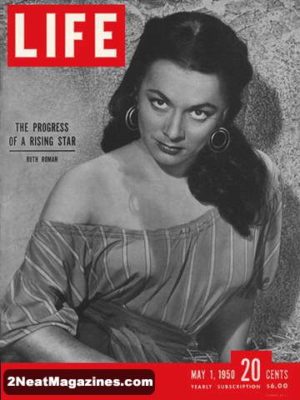
We start out our monthly focus on Ruth Roman with the genre that she was best known for: westerns.  As we discussed in our kickoff (see link above) to Roman, by 1950 (her first proper annum as a leading woman), she'd had a few years as a supporting player, and had had two big hits in 1949: The Window and Champion, after which she got a long-term contract with Warner Brothers, got the cover of Life Magazine proclaiming "The Progress of a Rising Star: Ruth Roman," and made a bevy of different films, including Dallas, our movie today starring Gary Cooper.  Like many first films in our Saturdays with the Stars profiles, Roman's role here is deceptive to her billing, with Cooper getting almost everything to do despite sharing the top of the banner with his young costar.  It's also, well, kind of an odd movie.

(Spoilers Ahead) The film focuses on Blayde "Reb" Hollister (Cooper, and yes, a moniker that could only exist in a movie), a member of the former confederacy who is such a believably good shot that even Wild Bill Hickok seems to have respect for him, whose family was killed by a group of Northerners during the war.  In the opening scenes, Hollister fakes his own death with Hickok's help, and swaps identities with Martin Weatherby (Erickson), a green-in-the-gills newly-appointed marshall who will surely soon die as he doesn't have the shooting skills or manner to take on such a job.  He got the role to impress his fiancé Tonia (Roman), whose family is being terrorized by the same family that killed Hollister's, the Marlows (headed by Massey's Will, a now "respectable" man who is still just as corrupt as ever).  As the movie unfolds, we see that Tonia is torn for her newfound lust for Reb, as well as her duty to Martin.

The film is odd in the sense that Martin never becomes a villain or ever even a proper adversary of Reb, even though he's clearly got designs on his girl.  There are moments, yes, where he basically hides Reb's papers that would exonerate him for a previous crime (freeing him up to marry Tonia), but there's not a lot of climax to that scene since it's obvious that he'll do the right thing, and he does so in quick succession.  He's certainly not the villain, as that's Massey's Will, a 1950's style nemesis as he's not only cold-blooded but also trying to be "respectable," something that as the decade would wear on would become something we'd see with more frequently-the bad guy who makes his operation legit.

Roman's part is small, as I mentioned above, but it isn't without interest.  Cooper at this point of his career had seen most of his leading man good looks, the kind that made him impossibly seismic back in the 1930's & 40's, start to fade so it's a bit unbelievable that a woman 20 years his junior would so quickly become enamored with a man who looks more like her father than her lover, but she makes the love triangle compelling.  The best part of the movie is that, while you suspect Cooper will get the girl (it's hard to imagine him letting such a thing as the final kiss slip through his contract negotiations), it's not clear the entire movie which guy Tonia will ultimately choose, and I kind of liked that for a western.  Tonia is not a great character, and I hope we'll see more from Roman as this series progresses, but she finds an intrigue in the character that I think someone else would have made one-note.  Honestly, though it feels like the sort of movie that would be easily glossed over in the filmography of an actor as important as Cooper (I don't think I'd ever heard of Dallas before picking it for this series), between the unusual plot beats, the undecided romance, the glossy Technicolor, and some fun side characters (particularly Barbara Payton's fiery "mob mol" trope-character), this isn't a bad way to spend an afternoon.